
Blog

  • How to Make Your Makeup Last All Day (No, Really)

    How to Make Your Makeup Last All Day (No, Really)

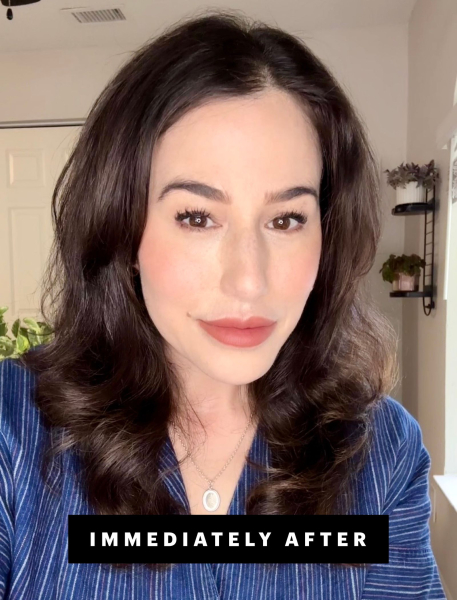
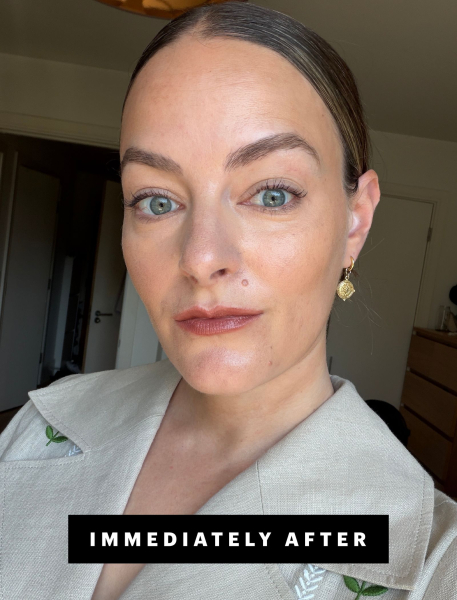
    Allure staff demonstrating tips on how to make makeup last all day longSource Images: Allure staffSave StorySave this storySave StorySave this story

    Who among us hasn’t left the house feeling like their makeup looks flawless, only to catch their reflection a few hours later and wonder where half of it went? Between heat, normal facial movements, skin type, and stress-induced face-touching, keeping makeup in place and looking just as fresh as when you applied it can feel like a full-blown side hustle—but without the money.

    Fortunately, creating a truly long-lasting, sweat-proof makeup look isn't about piling on more products. It's about using the right techniques from the very beginning. In fact, some of the most effective tricks happen before you apply your foundation. The timing of your skin-care routine, the way you use (or don’t use) primer, how you apply powder, and even what you do before filling in your brows can make a surprisingly big difference in how well your makeup holds up.

    To separate fact from fiction in the quest for long-lasting makeup, we asked professional makeup artists Katie Jane Hughes, Karol Rodriguez, and Jenny Patinkin to share the tips they rely on when they need makeup to withstand hours under hot lights, in front of the camera, or just existing in the real world. Ahead, discover their best advice for making your makeup stay put, from strategic layering techniques to inevitable touch-up tricks that can help keep everything unwavering from morning to night.

    Don’t jump into makeup immediately after skin care

    Being in a rush and having your makeup last are not reconcilable, especially when it comes to timing your makeup application to your skin care. It’s an absolute must to put some space between the last step in your skin-care routine and the first step of your makeup routine. “It’s best to let your skin care dry down a little bit before moving on to makeup,” says Patinkin. Hughes agrees, telling Allure you should wait five to seven minutes, “then go on with a complexion product.”

    You’ll know it’s time when your skin doesn’t feel slick anymore. “I have dry skin, so I like to go in with a thicker moisturizer,” Rodriguez says. “When I can tap my cheek, and it's no longer wet—just bouncy—that's when I know I'm ready for makeup.”

    Use as little product as possible

    Is “less is more” a cliché? Yes. Is that because it’s true? Also, yes, especially when it comes to makeup and the skin care you’re applying before it. “Don't overdo skin care because too much is detrimental to your makeup,” Hughes says.

    Our pros unanimously agree. Rodriguez says resist the urge to do a full "12-step Korean skin care routine" before starting your makeup. “You're making a little mess.” Instead, they say, use minimal product all the way up to your powder.

    Patinkin always tells her clients, the thinner the layer, the longer the wear. “Definitely use a light hand, apply as little product as you can get away with, and you don’t have to apply makeup on every surface of your face—especially those areas that are prone to getting sweaty, like the sides of the nose and the upper lip.”

    Foundation primer is optional—unless you’re oily or sweat-prone

    Allure social media manager Bianca Richards applying Danessa Myricks Yummy Skin Blurring Balm Powder before base makeupCourtesy of subjectDanessa Myricks Beauty Yummy Skin Blurring Balm Powder in Universal in branded component on a light gray backgroundSave to wishlistSave to wishlist
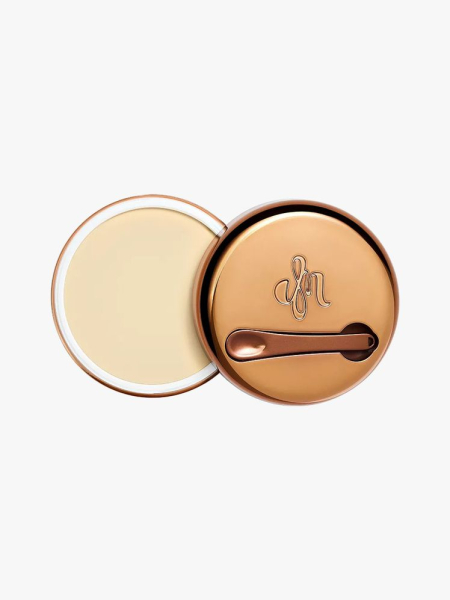
    Danessa Myricks

    Yummy Skin Blurring Balm Powder Universal

    $39

    Sephora

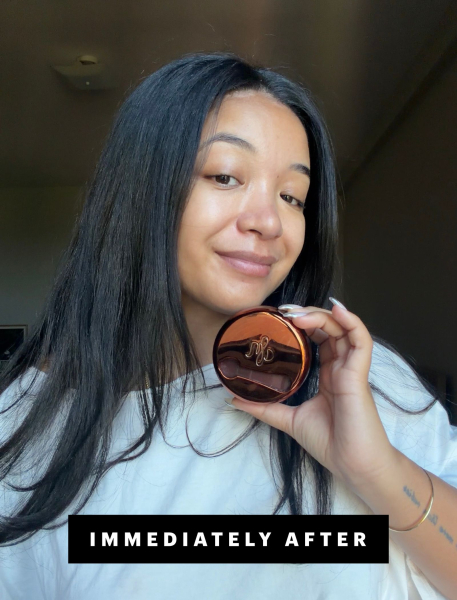
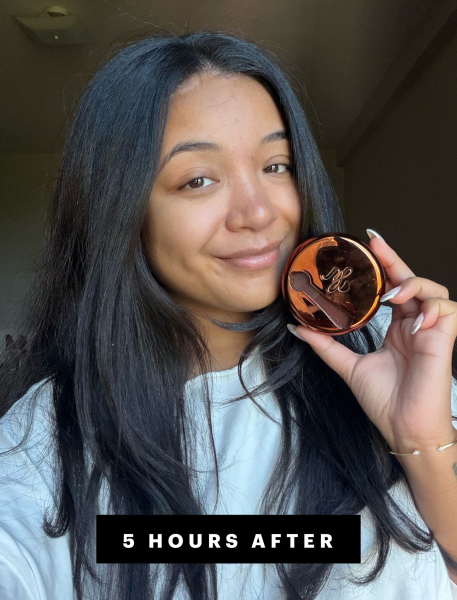
    Bianca Richards holding up primer productRichards immediately after applying Danessa Myricks Yummy Skin Blurring Balm Powder under her base makeupCourtesy of subjectBianca Richards holding up primerRichards five hours after base makeup applicationCourtesy of subject
    Patinkin says she’s not a big primer person, noting that the aforementioned thin layers of skin care can have just as much of an impact on the longevity of your makeup.

    Although Rodriguez doesn’t insist on primer either, they do acknowledge how helpful it can be if you’re working with oily skin or you tend to get sweaty. For very oily skin, they recommend Danessa Myricks Yummy Skin Blurring Balm Powder Universal, which Bianca Richards, Allure's social media manager, routinely uses for her combination skin.

    Eye shadow primer, on the other hand, is not optional

    Allure senior editor Jesa Marie Calaor applying eye primer before shimmering shadow and liquid linerCourtesy of subjectToo Faced Shadow Insurance 24-Hour Eyeshadow Primer mint and gold vial of eye shadow primer on light gray backgroundSave to wishlistSave to wishlist
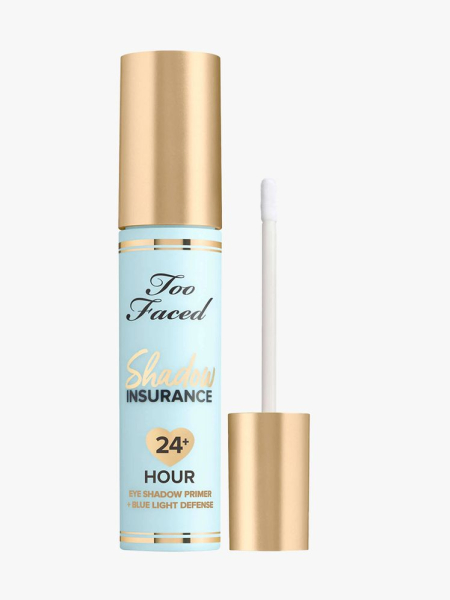
    Too Faced

    Shadow Insurance 24-Hour Eyeshadow Primer

    $28 $24 (14% off)

    Amazon

    $28

    Nordstrom

    $28

    Ulta Beauty

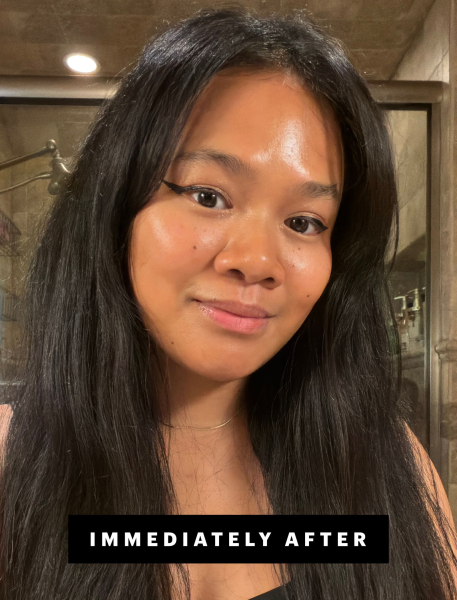
    Jesa Marie Calaor wearing winged eyelinerCalaor immediately after applicationCourtesy of subjectCalaor holding up Too Faced Shadow Insurance 24Hour Eyeshadow Primer five hours after applicationCalaor five hours after applicationCourtesy of subject
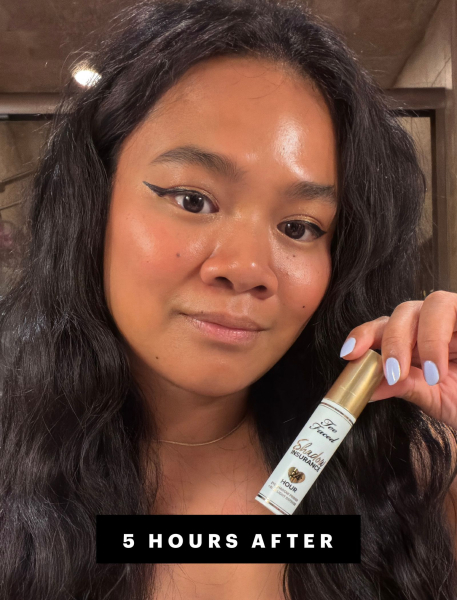
    “If you’re wearing powder eye shadow, eyelid primer is a must,” Patinkin insists, saying that it creates a smooth layer that prevents the sebum that’s naturally present on your lid from disturbing the shadow. She happens to love Nars Pro-Prime Smudge Proof Eyeshadow Base.

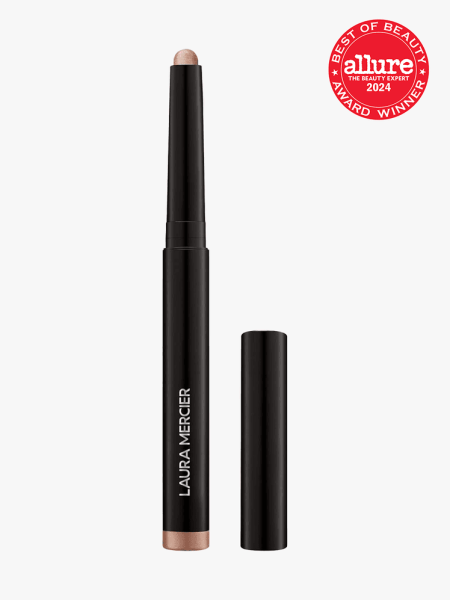
    But you don’t necessarily have to use something specifically indicated as an eye shadow primer to make your look last. Hughes and Rodriguez are fans of simply applying some powder to your lids before going in with shadow. “The best eye shadow primer is just a bit of setting powder to neutralize the base and make it not sticky,” Hughes says. “But if you need more longevity than that, I would say go in with a Laura Mercier Caviar Stick, put some setting powder over the top once you’re done blending it, and then go in with your powder eye shadow for a really bulletproof eye.”
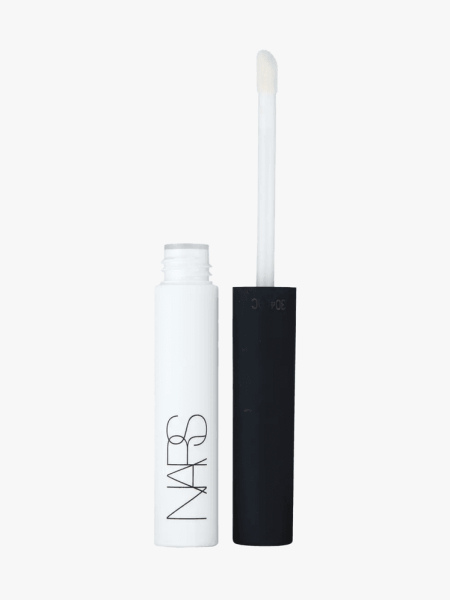
    Nars Pro-Prime Smudge Proof Eyeshadow Base in branded component on a light gray backgroundSave to wishlistSave to wishlist

    Nars

    Pro-Prime Smudge Proof Eyeshadow Base

    $28

    Nordstrom

    $28

    Sephora

    Laura Mercier Caviar Stick Eye Shadow in branded component with best of beauty seal in the top right corner on a light gray backgroundSave to wishlistSave to wishlist

    Laura Mercier

    Caviar Stick

    $33

    Amazon

    $33

    Nordstrom

    $33

    Sephora

    Jesa Marie Calaor, Allure’s senior editor, considers primer essential for all eye looks, especially if you have oily lids. She considers Too Faced Shadow Insurance 24-Hour Eyeshadow Primer “ol’ reliable.” “My lids will eat anything you lay on top of them, and this primer not only prevents that from happening, but it also keeps my eye makeup looking vivid for hours.”

    Double up on powder

    Richards applying loose and pressed powdersCourtesy of subjectFenty Beauty branded powder component on light gray backgroundSave to wishlistSave to wishlist
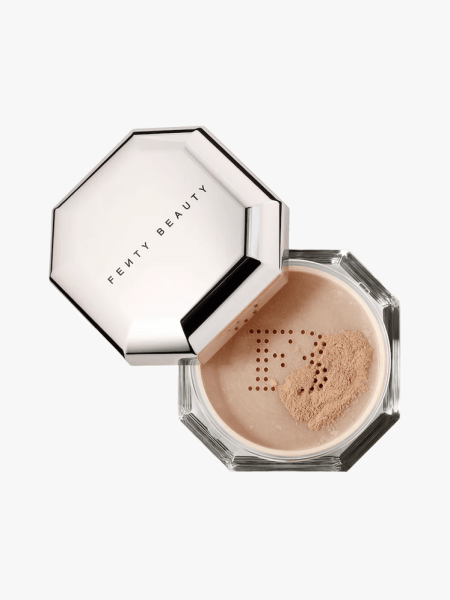
    Fenty Beauty

    Fenty Beauty by Rihanna Pro Filt'r Instant Retouch Setting Powder

    $36

    Ulta Beauty

    $36

    Sephora

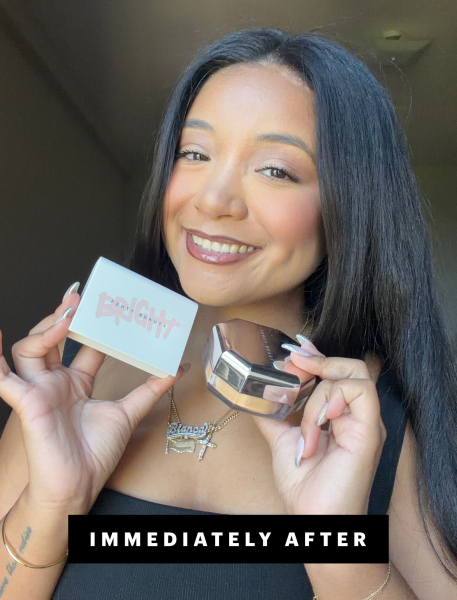
    Bianca Richards holding up Fenty powdersRichards immediately after applying loose and pressed powdersCourtesy of subjectBianca Richards holding up Fenty powdersRichards five hours after applicationCourtesy of subject
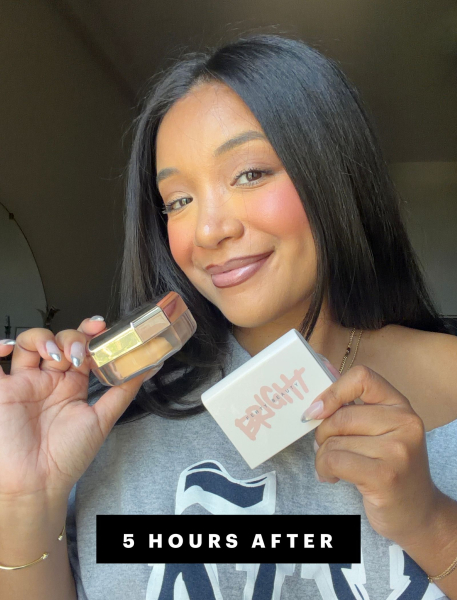
    Powder is arguably the most important element of long-lasting makeup. (“It's your best friend,” says Rodriguez.) If you’ve ever wondered which is going to help your makeup last longer—pressed or loose—the answer may surprise you: both—together.

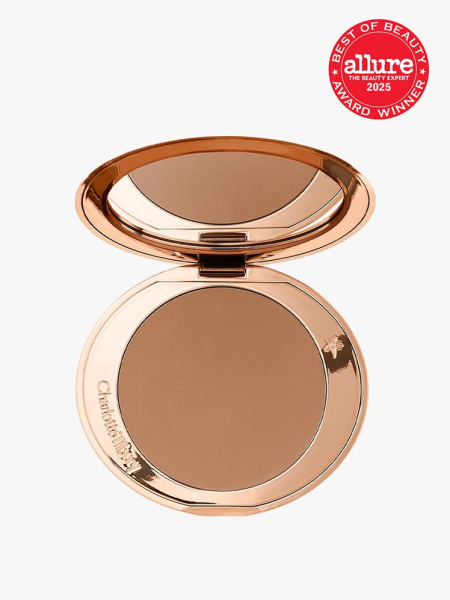
    Rodriguez recommends using a loose powder (like the Makeup by Mario SurrealSkin Soft Blur Setting Powder) first, before adding your pressed powder (like the Charlotte Tilbury Airbrush Flawless Finish) when setting your face.
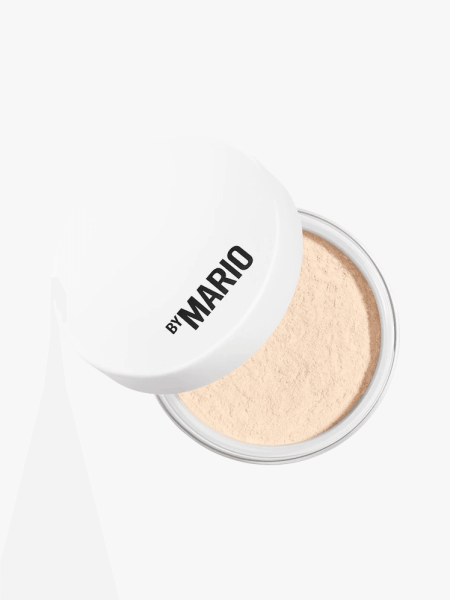
    Makeup by Mario SurrealSkin Soft Blur Setting Powder in branded component on a light gray backgroundSave to wishlistSave to wishlist

    Makeup by Mario

    SurrealSkin Soft Blur Setting Powder

    $38

    Sephora

    Charlotte Tilbury Airbrush Bronzer in branded component with the best of beauty 2025 seal in the top right corner on a light gray backgroundSave to wishlistSave to wishlist

    Charlotte Tilbury

    Airbrush Bronzer

    $59

    Amazon

    $59

    Nordstrom

    $59

    Ulta Beauty

    Richards also doubles up on powder (both by Fenty Beauty), but she has her own method with an extra step. First, she sets her entire face with powder. She then spritzes on setting spray before patting on a pressed powder.

    When it comes to this tip, do you, but be careful not to overdo it with any of your products. While using both types of powder can prevent eye makeup from budging, excess pressed powder can cause the finish to look cakey and broken up, Rodriguez says.

    Don’t sweep on your powder—press it in

    Allure contributing editor Marci Robin applying powderCourtesy of subjectRose & Ben C42 Brush in branded component on a light gray backgroundSave to wishlistSave to wishlist
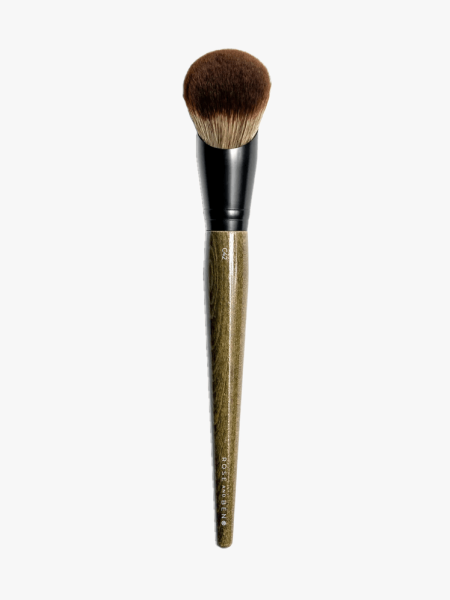
    Rose & Ben

    C42 Brush

    $45

    Amazon

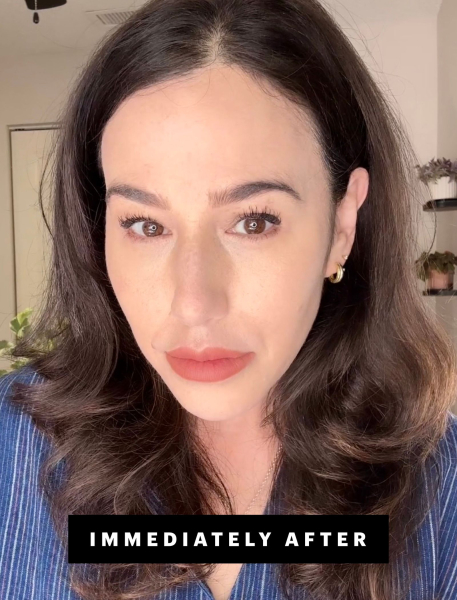
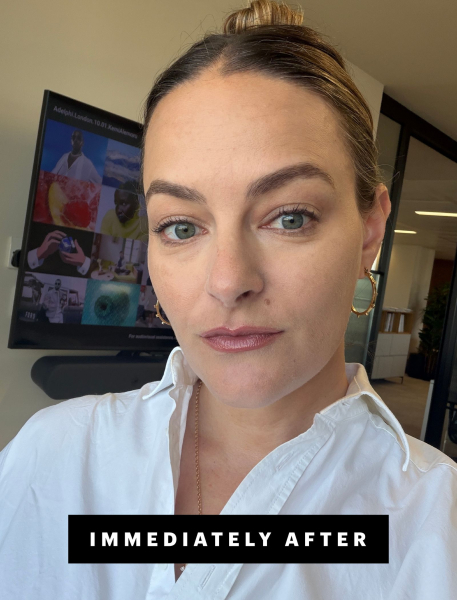
    Marci RobinRobin immediately after applying powderCourtesy of subjectRobin holding up a Rose  Ben Beauty brush and Catrice loose setting powder five hours after applicationRobin five hours after applicationCourtesy of subject
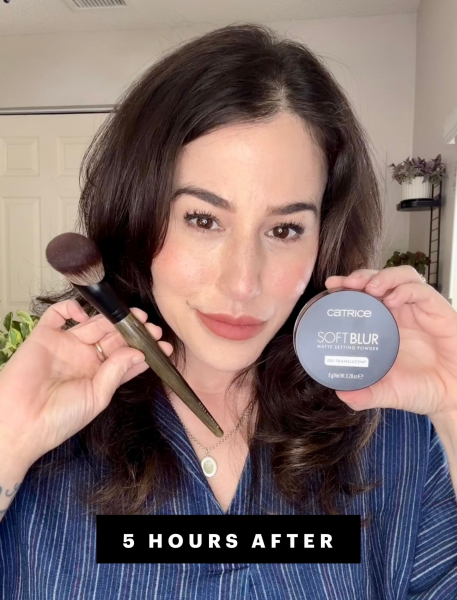
    How you apply powder is just as important as the powder itself, and it can mean the difference between a makeup look that lasts and a long-lasting makeup calamity. “Pressing it into your skin instead of sweeping it on top of your skin is more beneficial for longevity,” Patinkin says.

    Hughes, who loves using powder foundation as a setting powder, agrees and recommends pressing it in with a puff or brush. “When I say ‘press,’ I mean really blot it. Blot it on like you would use a blotting sheet,” she says. That technique ensures the most staying power.

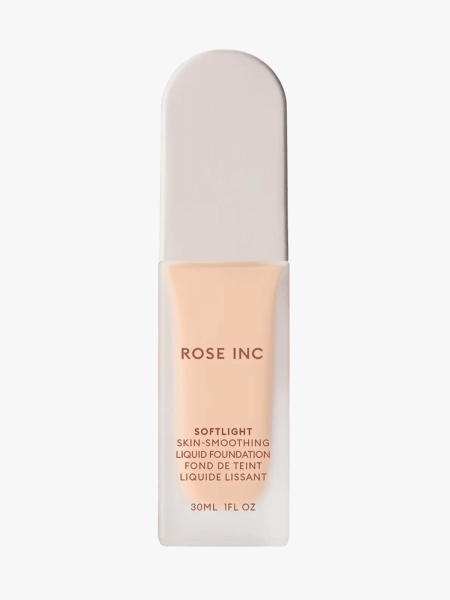
    I tried this technique with the Rose & Ben C42 Brush and Catrice Soft Blur Matte Setting Powder over Rose Inc. Softlight Skin-Smoothing Liquid Foundation and was pleasantly surprised to find very little shine hours later, though I think a puff may ensure even less change over the course of the day.
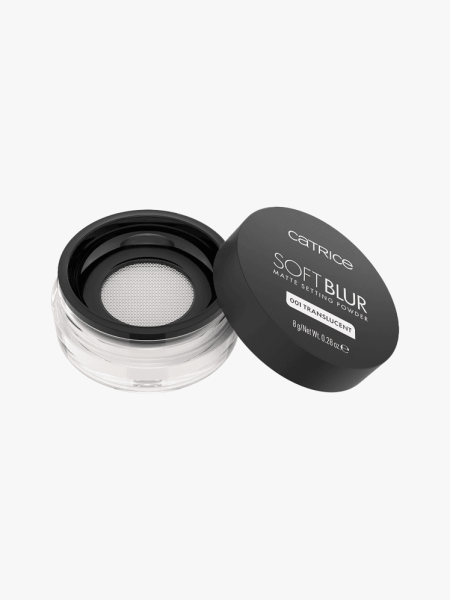
    Catrice Soft Blur Matte Setting Powder in branded component on a light gray backgroundSave to wishlistSave to wishlist

    Catrice Cosmetics

    Soft Blur Matte Setting Powder

    $9

    Amazon

    Rose Inc. Softlight Skin-Smoothing Liquid Foundation in branded component on a light gray backgroundSave to wishlistSave to wishlist

    Rose Inc

    Softlight Skin-Smoothing Liquid Foundation

    $54

    Nordstrom

    Sandwich your powder or setting spray

    Allure content director Sophie Panych “sandwiching” her setting powderCourtesy of subjectLaura Mercier Translucent Loose Talc-Free Setting Powder Ultra-Blur in branded clear jar with soft peach lid on light gray background with red Allure Best of Beauty seal in the top right cornerSave to wishlistSave to wishlist
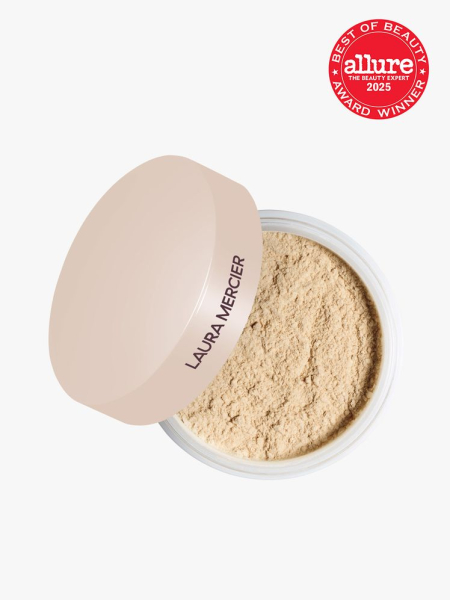
    Laura Mercier

    Translucent Loose Powder

    $43

    Amazon

    $43

    Nordstrom

    $43

    Sephora

    Sophie Panych wearing a white shirtPanych immediately after using the “powder-sandwiching” techniqueCourtesy of subjectSophie Panych holding up Laura Mercier loose powderPanych seven hours after applicationCourtesy of subject
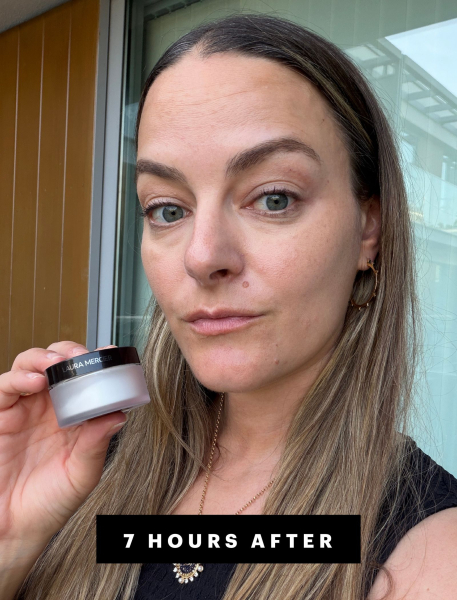
    Of course, you’re going to set your foundation and concealer with powder and/or setting spray, but have you considered a sandwiching technique? “I will use loose powder before foundation,” says Rodriguez, who likes this technique especially for oily skin. “That way, your oils have to go through the loose powder first before breaking through the foundation.”

    Just make sure that you don’t put powder on top of sweat. “You never want to powder on top of something wet,” Rodriguez says. “It's just gonna make the powder look darker.” You know how getting a pan of pigment wet makes it look darker? Same concept.

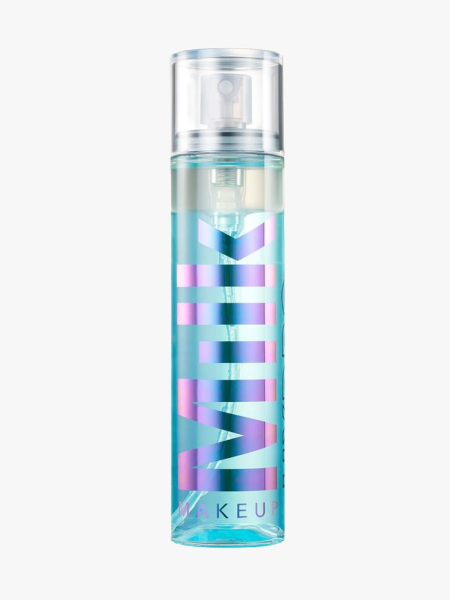
    The same sandwiching technique works for setting spray, too. “It’s a great trick to apply a setting spray before you start applying your makeup as well as after applying,” says Patinkin. The options are endless with formulas for every skin type and desired finish, but Rodriguez names Makeup by Mario SurrealSkin Soft Setting Spray and Milk Hydro Grip Setting Spray as fantastic picks for everyone.
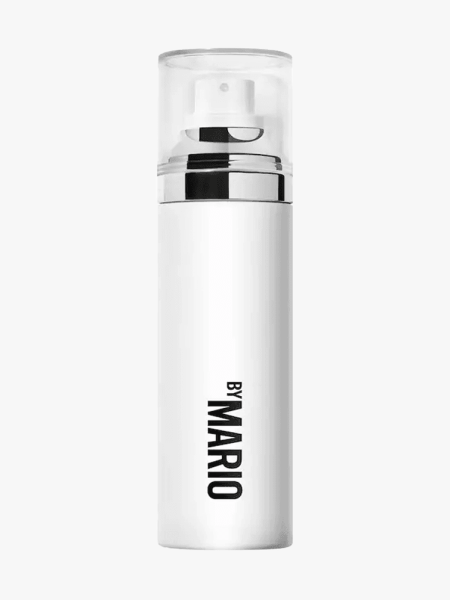
    Makeup by Mario SurrealSkin Soft Setting Spray in branded component on a light gray backgroundSave to wishlistSave to wishlist

    Makeup by Mario

    SurrealSkin Soft Setting Spray

    $36

    Sephora

    Milk Makeup Hydro Grip Hydrating Setting Spray in branded component on a light gray backgroundSave to wishlistSave to wishlist

    Milk Makeup

    Hydro Grip Setting Spray

    $38

    Amazon

    $38

    Sephora

    $38

    Ulta Beauty

    Allure content director Sophia Panych put this tip to the test with the Laura Mercier Translucent Loose Powder and Pat McGrath Labs Skin Fetish: Sublime Perfection Foundation during the recent London heat wave. Seven hours later, she found that her foundation still had coverage. “I’m a face toucher,” she admits, which might have had something to do with the fading. In addition to resisting the urge to touch your cheeks, she advises steering clear of a hydrating foundation, which is more prone to slipping than other formulas.

    Layer your cream and powder blush

    Robin layering cream and powder blushCourtesy of subjectMorphe M202 Slanted Blush Brush in branded component on a light gray backgroundSave to wishlistSave to wishlist
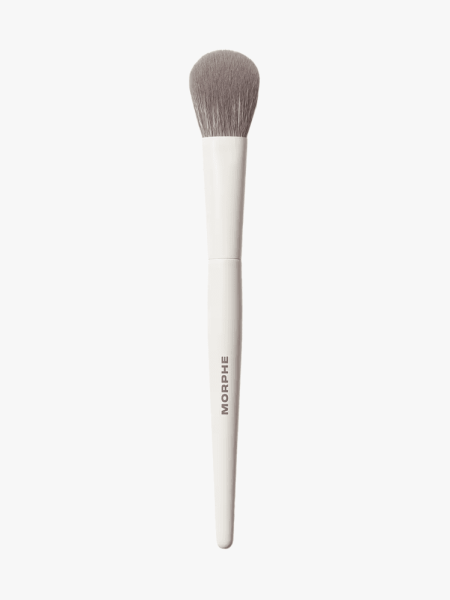
    Morphe

    M202 Slanted Blush Brush

    $13

    Ulta Beauty

    Marci Robin wearing a blue shirtRobin immediately after layering cream and powder blushCourtesy of subjectMarci Robin holding up blush and blush brushesRobin five hours after applicationCourtesy of subject
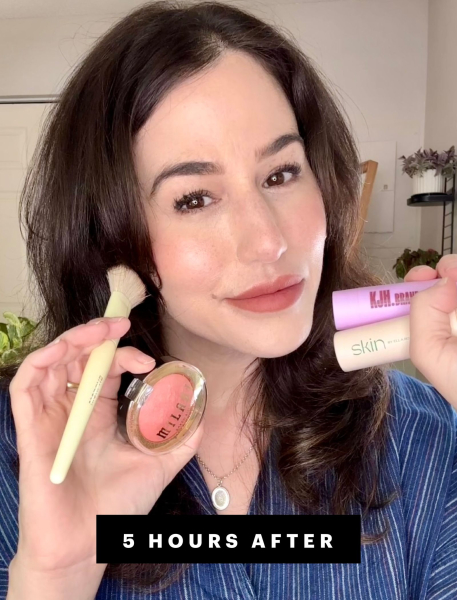
    Patinkin is excited to see how many cream blushes these days have sophisticated formulations that allow for long wear time without sinking into the skin or sliding off. Hughes’s own KJH.brand Soft Smudge Lip & Cheek is a perfect example, and I personally love how long it lasts on its own. That said, layering a powder blush on top of a non-dewy cream blush means flushed cheeks that stay flushed all day long.

    “It can be helpful to layer powder on top of cream, but you’ve got to use a very light, fluffy brush and a very light touch so that you don’t get patchiness or streaking,” says Patinkin, who recommends her namesake Jenny Patinkin Luxury Sustainable Cheek Brush for the job. We also love the Allure Best of Beauty Award-winning Jones Road The Blush Brush, which we’ve found never deposits too much pigment and allows you to build color with control.

    ArrowArrow

    I used the Morphe M202 Slanted Blush Brush to apply Milani Baked Blush atop the KJH Soft Smudge (pressing on first, followed by blending), and while that seemed a bit intense at first, I successfully avoided the dreaded color fade that so often leaves me looking dreary in the afternoon.

    Prep your brows with alcohol

    Calaor prepping her brows with alcohol and filling them in with pencilCourtesy of subject

    Sweat comes for us all—brows included. But whether your brow product of choice is a pencil, gel, powder, or a combination, there’s one trick that makes all the difference between staying filled in and disappearing into the night. Rodriguez recommends moistening a cotton swab with 70% rubbing alcohol and running it not just through brow hairs but also onto the skin on the brow bone. “That way, you're prepping the brow and the skin underneath, getting rid of all the excess skin care and anything that could have been accumulating, like sweat, so that your brow product works like it’s supposed to.”

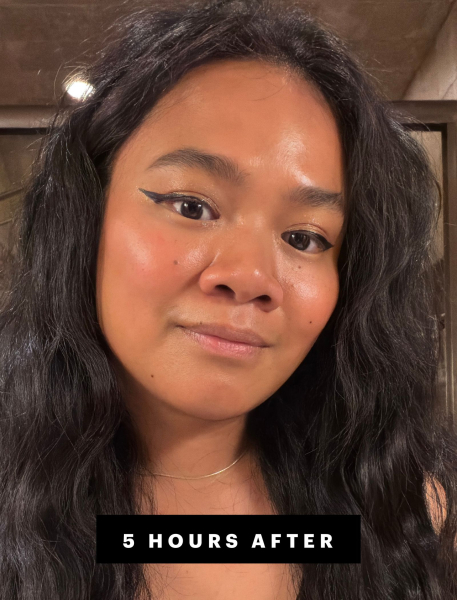
    Calaor, who has sensitive, dry skin, used a pad saturated with 70% alcohol and found it worked wonders at keeping her brows from fading in the summer heat. “I’d only do this on occasions I need my makeup to stay in place for an extended period of time,” she says, concerned about drying out the area.
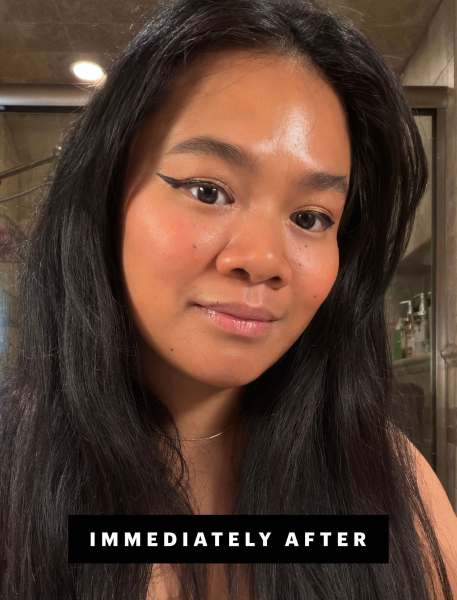
    Jesa Marie Calaor wearing winged eyelinerCalaor immediately after applying her brows with pencilCourtesy of subjectJesa Marie Calaor wearing winged eyelinerCalaor five hours after applicationCourtesy of subject
    Jenna Queller, MD, a board-certified dermatologist in Boca Raton, Florida, validates those concerns. “In general, using a small amount of isopropyl alcohol on the eyebrow area before applying brow products is unlikely to cause problems for most people if done only occasionally,” she says, as it can strip skin’s natural oils and disrupt the skin barrier over time. If you have sensitive skin or underlying conditions like rosacea or atopic dermatitis, she says you may want to try this trick with micellar water to remove excess oil instead.

    Lock in your lip liner

    Panych locking in her lip liner and color with powderCourtesy of subjectLaura Mercier Translucent Loose Talc-Free Setting Powder Ultra-Blur in branded clear jar with soft peach lid on light gray background with red Allure Best of Beauty seal in the top right cornerSave to wishlistSave to wishlist
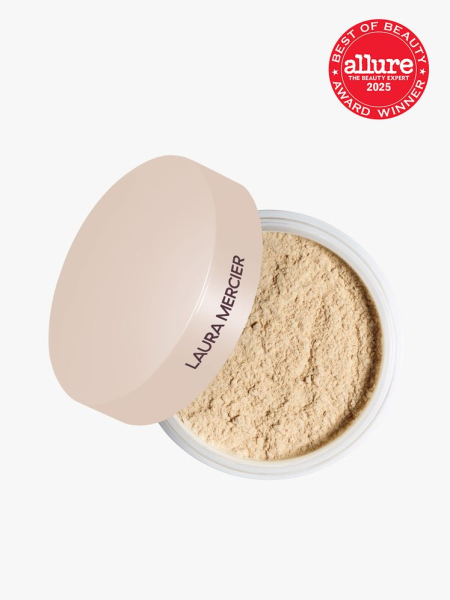
    Best Loose Powder

    Laura Mercier Translucent Loose Talc-Free Setting Powder Ultra-Blur

    $48

    Amazon

    Sophie PanychPanych immediately after applying lip colorCourtesy of subjectSophie Panych holding up loose powder and lip linerPanych four hours after applicationCourtesy of subject
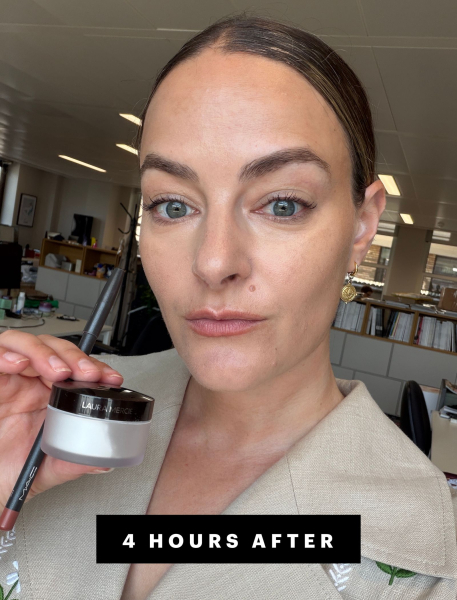
    Unless you literally don’t move your mouth at all, you should just accept that you’ll need to retouch your lips, Hughes says. But that doesn’t mean you can’t give yourself an advantage during the application process.“

    A little bit of powder over any lip liner or lip contour does a really good job of locking in that first base, therefore making everything that you put on after that last longer,” says Hughes, who recommends putting a bit of powder over your lip liner. “That will dry the perimeter of the mouth a little, making that area last longer.”

    Rodriguez says to save some of that powder for your lipstick, too. “I'll use my powder to set my lipstick just to give it a little bit more transfer-proof quality,” they say. But keep your expectations realistic, especially if you’ll be eating or drinking.

    Panych has been using this tip for dance performances for years. “I always found that it helped keep lip liner and lipstick on despite all the smiling and sweating and costume changing,” she says. “But, as the makeup artists said, if you're eating and drinking, there is a reality to how long your lip liner and lipstick are going to last.”

    To test the technique out for this story, she used MAC Lip Pencil in Beige-Turner, Laura Mercier Translucent Loose Powder, and Chantecaille Lip Crème. “After two hours, the lipstick had faded, but my lip liner was still firmly in place,” she says. Four hours later, after lunch, the lipstick was completely gone, and the lip liner had faded. “It is definitely still there, and the outline of my lips definitely remains.”


  • How Hair Is Used as “Armor” in House of the Dragon Season 3

    How Hair Is Used as “Armor” in House of the Dragon Season 3

    Emma D'Arcy as Rhaenyra Targaryen in a still from House of the Dragon season three sitting on the throne with a crown.HBO/Ollie UptonSave StorySave this storySave StorySave this story

    For a show filled with fire-breathing dragons and blood-soaked battles, you’d think the hair and makeup would be an afterthought. But for HBO’s House of the Dragon—set roughly 200 years before the events of Game of Thrones and based on George R.R. Martin’s Fire & Blood—the beauty looks are an integral part of the show’s storytelling. Who knew a few medieval braids could hold such meaning?

    A wig-heavy show like this with as many as 20 to 30 principal characters may seem like a daunting task for a hairstylist, but this isn’t Rosalia Culora’s first dance with dragons. The hair department lead also worked on all eight seasons of Game of Thrones, so she knows a thing or two about maintaining the perfect shade of Targaryen blonde and tracking blood splatters across strands during large battle sequences. As the third season airs, she shares more details from behind the scenes of the fantasy hit.

    Emma D'Arcy on set of House of the Dragons season three with her back to the camera showing off her intricately braided...

    A view of Emma D’Arcy’s intricately braided wig for their role as Rhaenyra Targaryen.

    HBO/Theo WhitemanHow the hair in season three tells a story

    Culora says that the hairstyles in the show are part of each character’s arc and personal evolution. “Each look has a backstory to it,” she says, especially with Rhaenyra, who is played by Emma D’Arcy and goes through a transformation from a princess to a warrior, fighting for her rightful title as Queen of the Seven Kingdoms. “When we first meet Rhaenyra in season one, there's a vulnerability…her hair's down quite a lot,” Culora says. “Then, as she becomes more of that dragon rider [and moves] into her own identity, the hair becomes more armored.” This leads to more intricate braiding, she says, adding that the hairstyles for the characters who ride atop the beasts and fight in battles are “part of their armor.”

    The hair designer was inspired by a specific tree in Sicily for the chainmail-like styles. “I've got family that lives right by this tree," she says. “The organic quality and the binding [of the roots]… there's an element of that that I like to put into the hairstyles.” She also takes inspiration from actual chainmail and fabric. “It's all about that texture and trying to create that texture in a hairstyle,” she says.
    Phia Saban as Helaena Targaryen in season three of House of the Dragon.

    Helaena Targaryen’s simple hairstyle in season three.

    HBO

    While Rhaenyra’s hair is shifting from soft to shield-like, the opposite is true for Alicent Hightower and Helaena Targaryen (Olivia Cooke and Phia Saban, respectively), who are both experiencing a loss of power this season. ”There's no trust in [The Red Keep], and it's like they don't want the handmaidens near them,” Culora says, adding that the styles were made to appear as though they’ve done their hair themselves. “You can tell that their hair isn't as regal as previous seasons, and we do see a lot more hair down and a lot more disheveled,” she adds.

    After all of these years in Westeros, Culora has a bit of fun weaving in her own subtle Easter eggs into some of the styles. In episodes one and two of this season, Culora braided a figure three in some character’s hair as a nod to the third season. She did the same at the end of season two, weaving an eight through hairstyles for the eighth and final episode. “I do these hidden things that no one really knows about in their hair,” Culora says. “I actually feature my initials at the end of the last episode, an ‘R’ and a ‘C’ hidden in their hair. It's like a signature.”

    Culora hints that there are other extreme changes when it comes to appearances this season, specifically for Baela and Rhaena Targaryen, who are Daemon Targaryen’s twin daughters. Of course, she can’t give anything away just yet. “It's almost like they're losing part of their identity a little bit,” she hints.

    Look closely and you'll spot an “R” and a “C” braided into Rhaenyra's hair .

    Look closely, and you’ll spot an “R” and a “C” braided into Rhaenyra’s hair (right).

    HBO/Ollie UptonWhat hairstyle would a dragon-rider have?

    Besides braids and the intricate, armor-like weaving, Culora says the silhouettes of the hairstyles mimic the curve of the dragons that the Targaryens are riding. “It just creates this beautiful bit of cinema…and it's not distracting,” she says. It’s also why we see so many half-up, half-down styles in the show. “It's a practicality, but it opens up the face, and it just allows the cast to essentially act and not think about what's going on on top of their head,” Culora says.

    More dragon riding also means less room for frivolous hair ornaments, especially for Rhaenyra, which were prevalent in season one. “It has to be practical, and if they’re on a dragon, it's got to be bound,” she says. During season two, the team focused more on binding the hair, although they did have some dragon ornamentation, but this season, Culora has eliminated all the embellishments.

    Matt Smith as Daemon Targaryen stands in front of a dragon in a still from HBO's House of the Dragon.

    The half-up hairstyles worn by characters like Daemon Targaryen (Matt Smith) echo the silhouette of the dragons they’re riding.

    HBO/Theo WhitemanBethany Antonia as Lady Baela Targaryen in season three of Hous of the Dragon riding a dragon.

    Bethany Antonio as Lady Baela Targaryen atop a dragon.

    HBO/Theo WhitemanThe many wigs of Westeros

    Culora says there are hundreds of wigs used in the show, and almost every principal character that appears in House of the Dragon has custom hairpieces—including Olivia Cooke, who wears a three-quarter wig to play Alicent Hightower. “We used about two inches of Olivia’s own hair front,” Culora says. The wigs were custom-made by Alex Rouse—the London-based company that’s made all the wigs for the series since Game of Thrones—using human hair and a lace-front technique.

    For D’Arcy’s character specifically, Culora cycles between three wigs—but there’s one in particular that she refers to as Rhaenyra’s “blood” wig. Since fake blood is so hard to get out of the white blonde color and often leaves pink stains, the hair team needs specific wigs dedicated to getting dirty. “I could write a book about that wig,” she says. “It's been there from day dot, and it's been on their head for several different [scenes], like the birthing sequence. It was the same wig when young Rhaenyra killed the boar, and there was blood everywhere.”

    Olivia Cooke as Alicent Hightower in season three.

    Olivia Cooke as Alicent Hightower in season three.

    HBO/Ollie Upton

    While the wigs aren’t washed every single night, they do follow a strict regimen of care. “We have to be really careful about where we dry the wigs and how we wash the wigs,” Culora says. “I wash them at an angle. You have to keep on top of it, especially because the seasons are so long and a character, like [Rhaenyra], does a lot. Their working days are long, and they're in many scenes.”

    Culora says they have to be especially careful with the wigs that have locs, worn by many characters who make up House Valeryon. “They do need regular upkeep and maintenance,” she says, especially during the first episode this season that featured the intense Battle of the Gullet. “When we got blood in the locs, I actually had to remove them, and we had standby locs in place to stitch in,” she said.

    Lord Corlys Velaryon  stands on his ship in a still from season three of House of the Dragon.

    Lord Corlys Velaryon (Steve Toussaint) in season three, episode one.

    HBO/Ollie UptonThe secrets behind Targaryen blonde

    While Daenarys Targaryen was the only character with the silvery blonde hair of her ancestors in Game of Thrones (besides her brother, who was killed early on in season one), House of the Dragon centers around the dragon-riding family, meaning that the cast is filled with white-blonde characters. Unfortunately for viewers who want to cosplay as a Targaryen, the icy shade likely won’t be replicable at your local salon. The platinum recipe was created back in 2009 for the very first season of Game of Thrones, although it’s been refined over time. “In theory, it's kind of the same recipe,” Culora says. “There are seven different colors in that wig. It has evolved, and each wig is ever so slightly different.”

    Phoebe Campbell as Rhaena Targaryen in a still from House of the Dragon season three.

    Rhaena Targaryen (Phoebe Campbell) in season three.

    HBO / Theo Whiteman

    To get the frosty look, Culora says it’s important to control what’s happening under the wig as well. “That's why we bald-cap the cast. That way you see partings, you see scalp, you're not seeing hair [underneath],” she says. “There's a vast amount of hair color product that goes under the wigs as well in some cases.” Even for the brunettes. For example, Gayle Rankin, who plays Alys Rivers, had lighter hair than her character’s dark chocolate brown. “Sometimes the stocking cap is not going to cut it,” Culora says. “You have to almost use [the actor’s] own head and hair as a canvas in the prep and color it up to help sell the wig.”

    While Culora doesn’t want to disclose any specific products used on set to avoid fans from selling them out, she says the most used product on set isn’t platinum blonde hair dye—although with the amount of Targaryens in the show, it’s likely a close second. But Culora says there’s something else she and her team can’t live without: “Lots and lots and lots of leave-in conditioner.”

    Emma D'Arcy as Rhaenyra Targaryen Steve Touissant as Lord Corlys Velaryon and Tom Cullen as TK in a still from the The...

    Rhaenyra Targaryen (Emma D’Arcy), Lord Corlys Velaryon (Steve Touissant), and their Targaryen blonde hair.

    HBO

  • 9 Best Foundations for Mature Skin That Smooth Texture and Blur Lines

    9 Best Foundations for Mature Skin That Smooth Texture and Blur Lines

    woman with glowing skin on a grey backgroundCARLOS and ALYSESave StorySave this storySave StorySave this story

    As your skin changes, your makeup should evolve with it, and that starts with finding the best foundations for mature skin. These formulas deliver even texture, a healthy radiance, and fine-line-blurring coverage without clinging to dryness or settling where you don’t want it. Many of today’s standout bases are infused with skin-care power players such as hyaluronic acid, vitamin C, and even retinol to tackle common concerns—think: fine lines, dark spots, redness, and dehydration.

    Our Top Foundations for Mature Skin

    • Best Overall: Armani Beauty Luminous Silk Foundation, $69
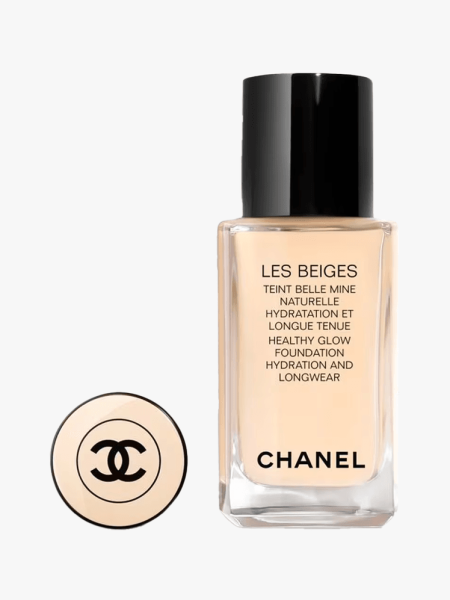
    • Best for Dry Skin: Chanel Les Beiges Healthy Glow Foundation, $69
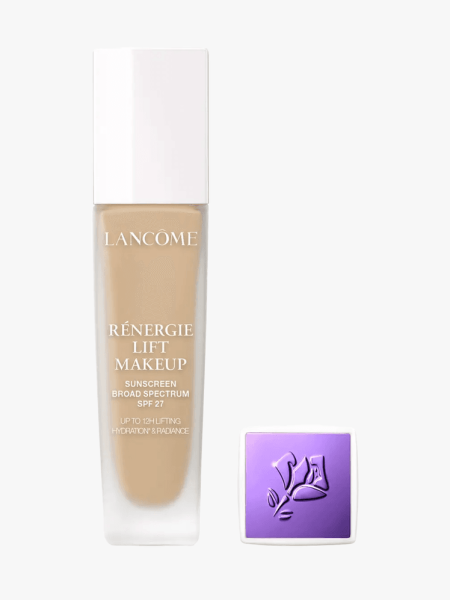
    • Best Medium Coverage: Lancôme Rénergie Lift Makeup Foundation SPF 27, $63
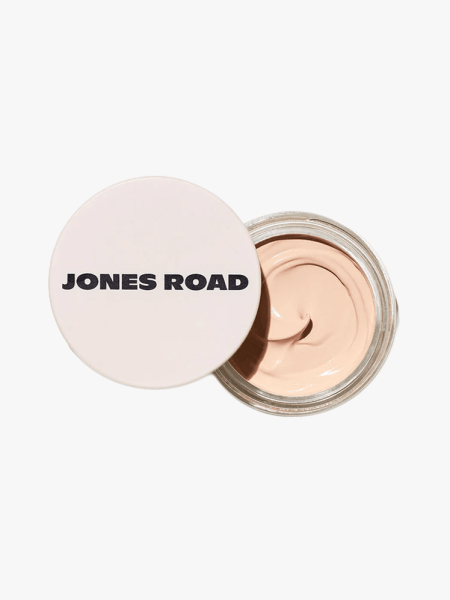
    • Best Lightweight: Jones Road Beauty What the Foundation, $46

    Frequently Asked Questions

    • What to consider when looking for a foundation for mature skin
    • How to prep mature skin for foundation
    • How to apply foundation on mature skin
    • Meet the experts
    • How we test and review products
    • Our staff and testers

    We put in the legwork—consulting makeup artists and leaning on our trusted team of editors—to uncover the foundations that stay smooth, flexible, and crease-free, no matter how expressive you are.

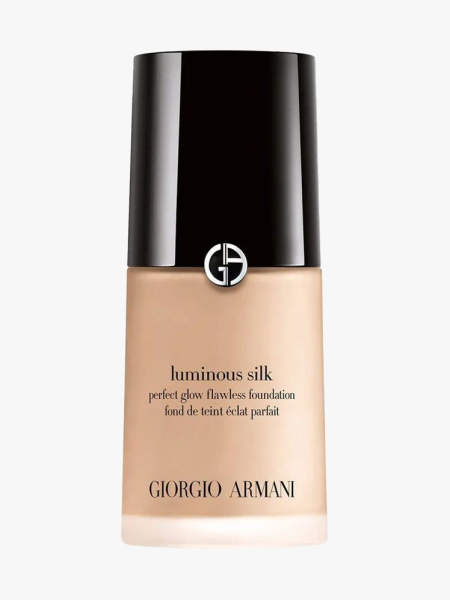
    Best Overall: Armani Beauty Luminous Silk Foundation

    Armani Beauty Luminous Silk Foundation bottle of foundation with black cap on light gray backgroundSave to wishlistSave to wishlist

    Armani Beauty

    Luminous Silk Foundation

    $69

    Nordstrom

    $69

    Sephora

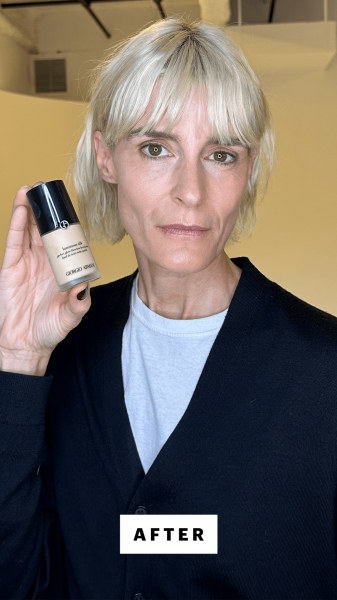
    Why it's worth it: Constantly name-dropped by makeup artists and enthusiasts, Armani Beauty’s Luminous Silk Foundation has earned its icon status with ample accolades, including an Allure Best of Beauty Award. Countless makeup artists, including Beau Nelson and Amrita Mehta, count Meghan Markle's favorite foundation as a go-to for mature clients due to its soft-focus finish and weightless texture. "This one has been a staple in my kit for over 15 years," New York City-based makeup artist Lisa Aharon attests. "It blurs pores and fine lines while leaving the skin with a fresh finish," she says, adding that the medium coverage is ideal for concealing sun spots and other imperfections such as blemishes.

    New York-based makeup artist Lauren D’Amelio Ventre loves that it’s packed with hydration—something aging skin needs more of—and helps make the skin look plumper and smoother. “It leaves a beautiful and flawless finish, and the formula melts into the skin seamlessly,” she says. Even though it’s ultra-hydrating, it’s also lightweight and won’t turn greasy throughout the day, which is why she often reaches for it for long events like weddings.

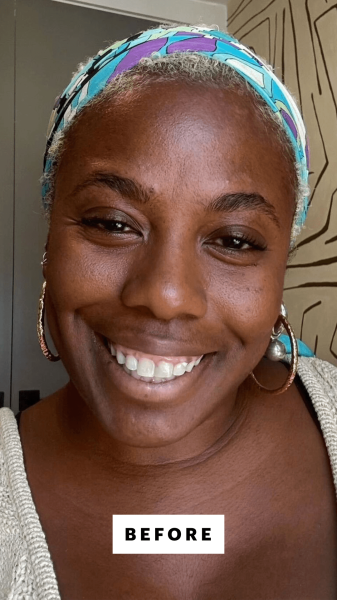
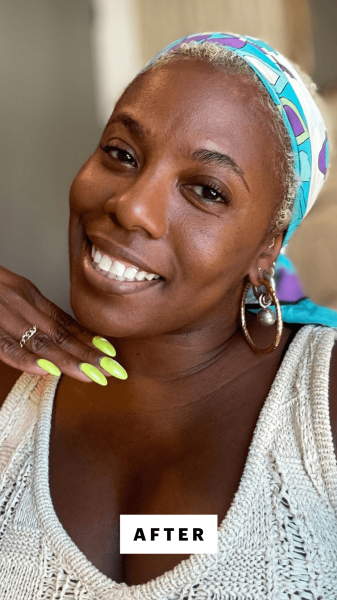
    Allure creative director Amber Venerable before applying the Armani Beauty Luminous Silk Foundation

    Allure creative director Amber Venerable before applying the Armani Beauty Luminous Silk Foundation

    Amber VenerableVenerable after applying the Armani Beauty Luminous Silk Foundation

    Venerable after applying the Armani Beauty Luminous Silk Foundation

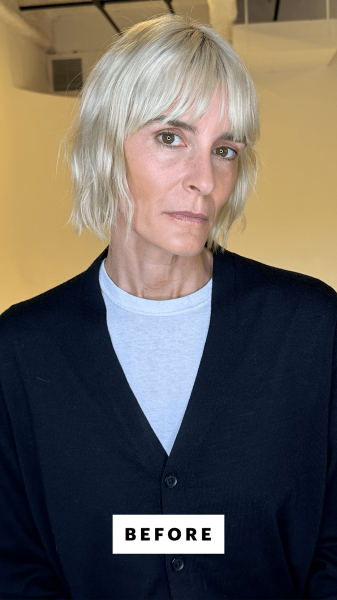
    Amber VenerableAllure tester before applying the Armani Beauty Luminous Silk Foundation

    Allure tester before applying the Armani Beauty Luminous Silk Foundation

    AllureAllure tester after applying the Armani Beauty Luminous Silk Foundation

    Allure tester after applying the Armani Beauty Luminous Silk Foundation

    Allure

    Tester feedback from creative director Amber Venerable

    AccordionItemContainerButtonLargeChevron

    ​​“I like minimal to light foundation coverage and I thought this had great coverage while also being very lightweight on my skin. My skin was radiant and glowing, so it lives up to the term luminous to say the least! Love it!”—Amber Venerable, creative director

    More to know

    AccordionItemContainerButtonLargeChevron

    • Key ingredient: glycerin
    • Finish: radiant
    • Coverage: medium-to-full
    • Shades: 44

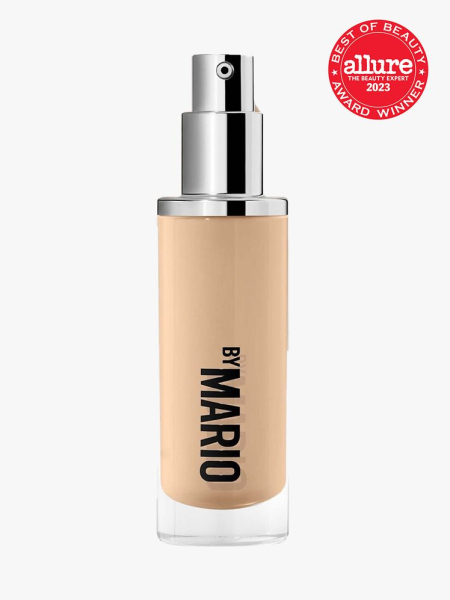
    Best Full-Coverage: Makeup by Mario SurrealSkin Foundation

    Makeup by Mario SurrealSkin Foundation bottle of foundation with silver pump cap on light gray background with red Allure Best of Beauty seal in the top right cornerSave to wishlistSave to wishlist

    Makeup by Mario

    SurrealSkin Foundation

    $48

    Sephora

    Allure tester applying the Makeup by Mario SurrealSkin Foundation

    Allure

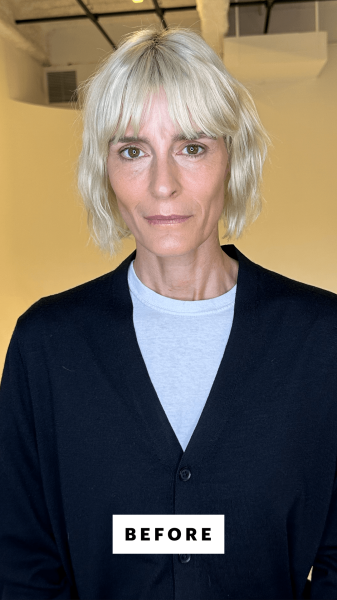
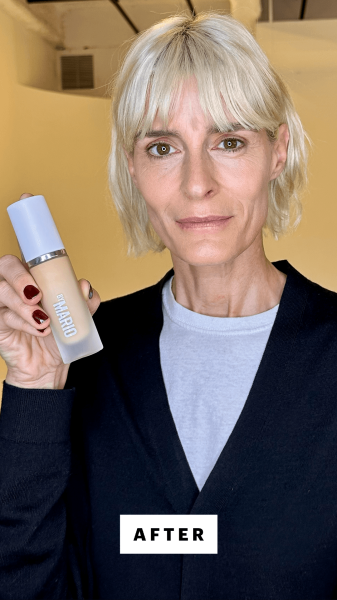
    Why it's worth it: Our 2023 Best of Beauty Award winner for best full-coverage liquid foundation went to Makeup by Mario's SurrealSkin Foundation—but don’t let the “full-coverage” label fool you. This formula is incredibly lightweight, buildable, and never cakey. Karol Rodriguez, a NYC-based makeup artist, said this foundation is one of her go-tos for people with exceptionally dry skin, which mature folks are prone to. Founder Mario Dedivanovic recommends using just one pump, applying it where you need the most coverage, and building from there. That’s easy to do thanks to skin-friendly ingredients like polyglyceryl-6 polyricinoleate (an ester that gives it a silky, glowy—not greasy—finish), plus hydrating staples like glycerin, grapeseed oil, and sunflower oil to help lock in moisture.

    Allure tester before applying the Makeup by Mario SurrealSkin Foundation

    Allure tester before applying the Makeup by Mario SurrealSkin Foundation

    AllureAllure tester after applying the Makeup by Mario SurrealSkin Foundation

    Allure tester after applying the Makeup by Mario SurrealSkin Foundation

    Allure

    Editor tip

    AccordionItemContainerButtonLargeChevron

    Even though it leaves a slightly dewy finish, our testers with oily skin found it held up beautifully throughout the day without turning shiny. Want something sheer? Mix a pump with your favorite moisturizer and pat it on with your fingers for a more natural, skin-tint effect.

    More to know

    AccordionItemContainerButtonLargeChevron

    • Key ingredients: glycerin, grapeseed oil, sunflower oil
    • Finish: satin
    • Shades: 39

    Best for Dry Skin: Chanel Les Beiges Healthy Glow Foundation

    Chanel Les Beiges Healthy Glow Foundation in branded components on a light gray backgroundSave to wishlistSave to wishlist

    Chanel

    Les Beiges Healthy Glow Foundation

    $69

    Chanel

    $69

    Nordstrom

    $69

    Ulta Beauty

    Why it's worth it: It may be 40% water, but Chanel’s Les Beiges Healthy Glow Foundation is no tinted moisturizer in disguise. The hydrating glycerin-based formula floods skin with moisture, while a mix of lightweight meadowfoam seed oil and silicones keeps the texture cushioned, comfortable, and smooth. “It leaves the skin hydrated and plump, while the radiant finish helps to create a glowy, seamless, and skin-like blend,” says Mehta. “It feels like a lightweight serum but offers light-to-medium, buildable coverage that keeps skin looking fresh and natural.” Aharon agrees, noting that mature skin often leans dry and dull, making a radiant finish ideal. With mica and other soft, light-reflecting pigments as well as a diffusing texture, it’s guaranteed to leave your complexion glowing.

    Tester feedback from Allure contributing commerce writer Christa Joanna Lee

    AccordionItemContainerButtonLargeChevron

    “I’ve always had slightly uneven skin tone, and now that it’s coupled with post-pregnancy melasma, I need more coverage than my usual tinted moisturizer. Les Beiges goes on smooth and creamy, melts in instantly, and evens everything out without looking like I’m wearing makeup. It has that your-skin-but-better vibe, which for me means it’s breathable, lightweight, and with just the right amount of glow.” —Christa Joanna Lee, Allure contributing commerce writer

    More to know

    AccordionItemContainerButtonLargeChevron

    • Key ingredients: glycerin, meadowfoam seed oil, jasmine stem extract, mica
    • Finish: radiant
    • Coverage: sheer-to-medium
    • Shades: 42

    Best Medium Coverage: Lancôme Rénergie Lift Makeup Foundation SPF 27

    Lancôme Rénergie Lift Makeup Foundation SPF 27 in branded component on a light gray backgroundSave to wishlistSave to wishlist

    Lancôme

    Rénergie Lift Makeup Foundation SPF 27

    $63

    Amazon

    $63

    Nordstrom

    $63

    Ulta Beauty

    Why it's worth it: Lancôme’s Rénergie Lift Makeup Foundation doesn't just happen to work well on mature skin; “this formula feels like it was made with intention for people with fine lines and wrinkles," says Magen Grays, a makeup artist based in Atlanta. Beyond the skin-like finish, the formula is packed with nourishing ingredients like ceramides to support the barrier, soybean oil and sorbitol to replenish moisture, and caffeine to “bring skin back to life,” says Grays. Lightweight silicones further create a “smoothing, blurring effect that doesn’t emphasize uneven skin texture,” she says. “It’s radiant without being heavy, and it moves with your face instead of sitting on top of it.

    Editor tip

    AccordionItemContainerButtonLargeChevron

    The built-in SPF 27 is a welcome bonus, but since it falls just shy of the American Academy of Dermatology's recommended SPF 30 for daily sun protection—and most people don't apply enough foundation to achieve the labeled SPF anyway—it should be considered an extra layer of protection, not a replacement for your dedicated sunscreen.

    More to know

    AccordionItemContainerButtonLargeChevron

    • Key ingredients: caffeine, vitamin E, iris extract
    • Finish: natural/radiant
    • Coverage: medium
    • Shades: 20

    Best Lightweight: Jones Road Beauty What the Foundation

    Jones Road Beauty What the Foundation in branded component on a light gray backgroundSave to wishlistSave to wishlist

    Jones Road

    Beauty What the Foundation

    $46

    Jones Road

    Why it's worth it: It makes sense that Bobbi Brown, who helped define the "no-makeup makeup" movement of the '90s—a philosophy that's just as relevant today—would create a foundation that wears more like skin than makeup. Jones Road Beauty's What the Foundation is an ultra-nourishing complexion tint that "blends seamlessly into the skin, leaving you with an even, fresh complexion that looks like your skin on its best day," says Kat Dorn, a makeup artist based in New York City. The lightweight, silky feel comes from jojoba oil, olive oil, and sodium hyaluronate (a form of hyaluronic acid), which keep skin comfortably hydrated throughout the day. If you're looking for full coverage, this isn't it. But if your goal is light to medium coverage that subtly evens your complexion, this formula feels so weightless, you'll forget you're wearing foundation at all.

    Editor tip

    AccordionItemContainerButtonLargeChevron

    Because the formula is rich in nourishing oils, you may notice a little separation over time. If that happens—or if it's applying a bit unevenly—simply give it a quick stir with the back of a makeup brush or a spatula before applying.

    More to know

    AccordionItemContainerButtonLargeChevron

    • Key ingredients: sodium hyaluronate, jojoba oil, olive oil
    • Finish: natural/radiant
    • Coverage: light to medium
    • Shades: 16

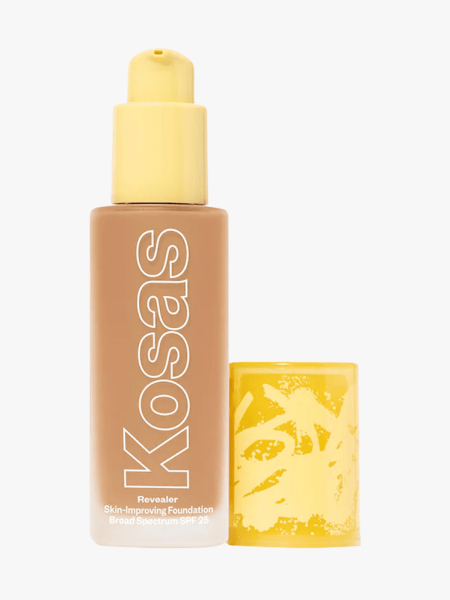
    Best for Sensitive Skin: Kosas Revealer Skin-Improving Foundation SPF 25

    Kosas Revealer Skin-Improving Foundation SPF 25 in branded component on a light gray backgroundSave to wishlistSave to wishlist

    Kosas

    Revealer Skin-Improving Foundation SPF 25

    $45

    Amazon

    $45

    Nordstrom

    $45

    Sephora

    Why it's worth it: If you glanced at the ingredient list without seeing the bottle, you'd probably assume it belonged to a moisturizer—not a foundation. When it launched, the Kosas Revealer Skin-Improving Foundation also became something of an unofficial Allure office uniform—there was a stretch where it seemed like every beauty editor was wearing it because of its dewy finish and ultra-creamy texture.

    “If you have reactive or sensitive skin, its gentle ingredients enhance your complexion without irritation,” says Grays. The formula is packed with staples like niacinamide, which "works with your skin's natural chemistry to improve overall skin texture by rebuilding a lipid layer, minimizing the appearance of pores, and preventing UV damage and inflammation as an antioxidant," Seattle-based board-certified dermatologist Brandith Irwin, MD, previously said. There’s also everyone’s fave hydrator, hyaluronic acid, to “bind water to collagen, trapping it in the skin, so that skin can appear plumper, dewier, and more hydrated," Beverly Hills-based board-certified dermatologist Tsippora Shainhouse, MD, previously explained.

    Editor tip

    AccordionItemContainerButtonLargeChevron

    The formula is rounded out with barrier-supporting squalane and plumping peptides, so if your mature skin also struggles with dryness, this one checks all the boxes.

    More to know

    AccordionItemContainerButtonLargeChevron

    • Key ingredients: niacinamide, squalane, hyaluronic acid, peptides
    • Finish: natural/radiant
    • Coverage: medium
    • Shades: 36

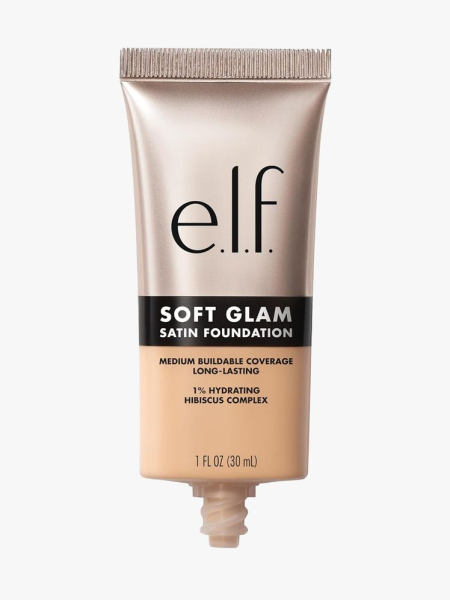
    Best Drugstore: e.l.f. Cosmetics Soft Glam Satin Foundation

    e.l.f. Cosmetics Soft Glam Satin Foundation in branded component on a light gray backgroundSave to wishlistSave to wishlist

    E.L.F. Cosmetics

    Soft Glam Satin Foundation

    $9 $8 (11% off)

    Amazon

    $9

    Ulta Beauty

    $8

    Walmart

    Why it's worth it: E.l.f. Cosmetics’ Soft Glam Satin Foundation is "like a superfood smoothie for the face," says Los Angeles-based makeup artist Scott Barnes—and at just $9, it costs about the same as one. The lightweight, breathable formula is infused with the brand's 1% Hydrating Hibiscus Complex, along with antioxidant-rich pomegranate and goji berry extracts to help keep skin hydrated and comfortable throughout the day. It delivers buildable medium coverage with a natural satin finish that strikes the sweet spot for both dry and oily skin. Barnes also loves how seamlessly it blends into skin, and he calls out the slim squeeze tube as a travel-friendly bonus that's easy to toss into a gym bag or carry-on.

    Editor tip

    AccordionItemContainerButtonLargeChevron

    If you're wearing this on a hot, humid day or have oily skin, apply a blurring primer just through the T-zone to help keep shine at bay without sacrificing its natural satin finish.

    More to know

    AccordionItemContainerButtonLargeChevron

    • Key ingredients: 1% Hydrating Hibiscus Complex, pomegranate, goji fruit
    • Finish: satin
    • Coverage: medium
    • Shades: 36

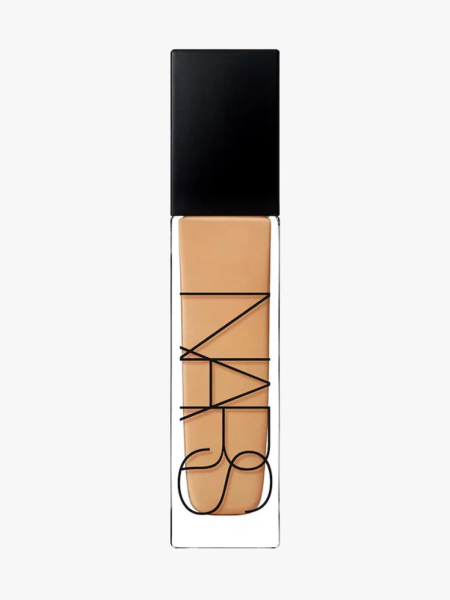
    Best Long-Wearing: Nars Natural Radiant Longwear Foundation

    Nars Natural Radiant Longwear Foundation in branded component on a light gray backgroundSave to wishlistSave to wishlist

    Nars

    Natural Radiant Longwear Foundation

    $55

    Nordstrom

    $55

    Ulta Beauty

    $55

    Sephora

    Why it's worth it: “Long-wearing” and “radiant” might sound like an oxymoron when talking about foundations for mature skin, but Nars’s Natural Radiant Longwear Foundation proves they can coexist. The medium-to-full coverage feels surprisingly lightweight and breathable, yet stays put for up to 16 hours without fading, creasing, or clinging to dry patches. Its longevity comes from a pigment system that prevents color from oxidizing and helps it blend with your natural tone rather than sitting on top. Raspberry, apple, and watermelon extracts give the formula a smoothing, hydrating finish. “When someone wants a more polished result but still wants skin to look alive, this is a go-to,” says Renée Loiz, a makeup artist based in Los Angeles. “It holds up exceptionally well and maintains radiance without breaking down or settling into fine lines.”

    Editor tip

    AccordionItemContainerButtonLargeChevron

    This formula already contains humectants like glycerin, sodium PCA, and sodium lactate to maintain hydration throughout the day, so you might want to apply a lightweight gel moisturizer underneath, especially if you have combination or oily skin.

    More to know

    AccordionItemContainerButtonLargeChevron

    • Key ingredients: raspberry, apple, and watermelon extracts
    • Finish: radiant
    • Coverage: medium-to-full
    • Shades: 36

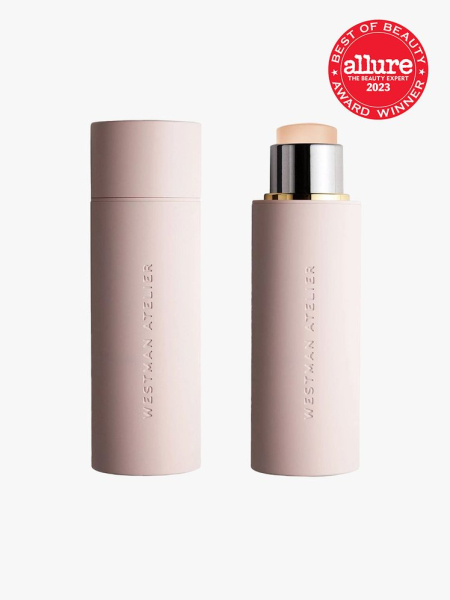
    Best Foundation Stick: Westman Atelier Vital Skin Foundation Stick

    Westman Atelier Vital Skin Foundation Stick light pink twist up foundation stick on light gray background with red Allure Best of Beauty seal in the top right cornerSave to wishlistSave to wishlist

    Westman Atelier

    Vital Skin Foundation Stick

    $68

    Nordstrom

    $68

    Credo Beauty

    $68

    Sephora

    Why it's worth it: Westman Atelier’s Vital Skin Foundation Stick, a 2022 and 2023 Best of Beauty Award winner, has a second-skin-like finish well-suited for mature skin, plus it's loaded with nourishing ingredients like squalane for moisture and phytosphingosine, a naturally occurring lipid found in the skin, to soothe. This cream formula melts into the skin, whether you apply it straight to your face or use a brush. "For radiance and a second-skin finish that doesn't settle into fine lines, I love this formula for mature skin," Aharon says. Due to calming ingredients like squalane and camellia seed oil, Aharon says this fragrance-free foundation is suitable for sensitive skin, regardless of age.

    Editor tip

    AccordionItemContainerButtonLargeChevron

    We also love packing this travel-friendly stick in a shade or two deeper than your complexion to double as a cream bronzer.

    More to know

    AccordionItemContainerButtonLargeChevron

    • Key ingredients: vegetable-derived squalane, berryflux vita extract, camellia seed oil, coconut oil
    • Finish: natural
    • Coverage: medium
    • Shades: 20

    Frequently Asked Questions

    What to consider when looking for a foundation for mature skin

    As you age, your complexion gains texture and leans toward the drier side. New York City-based, board-certified dermatologist Joshua Zeichner, MD, previously told Allure that this is because your skin produces less collagen and fewer natural lipids, such as ceramides and fatty acids, which leads to dehydrated skin and a weaker moisture barrier. When it comes to base makeup, "Fine or not-so-fine lines and larger pores can make foundation look mask-like at best and incredibly unflattering at worst," explains Los Angeles-based makeup artist Fiona Stiles. That's why finding a hydrating foundation is paramount for looking fresh. Tony Tulve, a New York City-based makeup artist, recommends choosing liquid foundations as they "act more like a second skin." Overall, finding a buildable-coverage formula with skin-plumping, fine-line-minimizing ingredients like hyaluronic acid and squalane is the key to a flawless, crease-free base.

    How to prep mature skin for foundation

    Before you touch your makeup brushes, prepping your skin is essential for creating the smoothest finish possible. "Moisture is key, so always make sure you start with a moisturizer that's hydrating but won't turn greasy and interrupt your foundation texture," Barose previously told Allure. Gucci Westman, a Los Angeles-based makeup artist, also emphasized being vigilant about moisturizing your whole face, especially the area around your eyes. Crystal Gossman, a New York City-based makeup artist, adds that layering on hydrating serums and essence toners will give the skin that juicy, plump feel and a natural tackiness to help foundation grip without needing a primer.

    However, if you know you’ll be out and about all day—or have a special event—primer can be helpful for extra long-wearing benefits. Barose recommends blurring formulas and straying away from mattifying formulas. He also gives balm-like formulations (like Danessa Myrick's Yummy Skin Moisture Repair Balm Serum) kudos for conditioning your skin while locking makeup in place. "You also don't need to wear it all over the face,” he explains. “Focus on lines or [other areas] of your face [you want to] blur.”

    How to apply foundation on mature skin

    Tulve leans into the "less is more" philosophy when applying foundation to mature skin. Denser, full-coverage formulations may end up accentuating fine lines, so use a buildable formula you can layer to your desired finish for a seamless, second-skin-like result. "I apply foundation on the larger areas of the face first, like the cheeks and forehead, then I go in and tweak around the nose and the chin area," New York City-based makeup artist Sandy Linter previously told Allure. “Lastly, I'll apply concealer, plus a touch of foundation under the eye area.”

    If you apply your makeup with your fingers, you may want to swap your digits for a makeup sponge or foundation brush to ensure even coverage. "[Using your] fingers can look blotchy, uneven, or gloppy, which can make your lines come out more," Barose said. To buff the foundation in, Barose recommends moving the brush in circular motions. “This will help the foundation spread smoothly, even over hard-to-reach areas with lines and wrinkles,” he notes. To ensure a smooth, blotch-free canvas, you can use a damp sponge as a final step to buff and blend.

    Meet the experts

    • Lisa Aharon, a makeup artist based in New York City
    • Lauren D’Amelio Ventre, a makeup artist based in New York City
    • Crystal Gossman, a makeup artist based in New York City
    • Magen Grays, a makeup artist based in Atlanta
    • Brandith Irwin, MD, a board-certified dermatologist based in Seattle
    • Sandy Linter, a makeup artist based in New York City
    • Renée Loiz, a makeup artist and founder of Color May Vary, based in Los Angeles
    • Amrita Mehta, a bicoastal makeup artist
    • Beau Nelson, a makeup artist based in Los Angeles
    • Tsippora Shainhouse, MD, a board-certified dermatologist based in Beverly Hills, California
    • Fiona Stiles, a makeup artist based in Los Angeles
    • Tony Tulve, a makeup artist based in New York City
    • Gucci Westman, a makeup artist and founder of Westman Atelier, based in Los Angeles
    • Joshua Zeichner, MD, a board-certified dermatologist based in New York City

    How we test and review products

    Before reviewing any makeup, we ask questions about a number of factors: What ingredients are in it? Does the brand offer a wide shade range that includes consumers with all skin tones and undertones? Is it safe for readers who have sensitive skin or wear contact lenses? Is it on the affordable side or more of a splurge? Is its packaging consciously designed or needlessly wasteful?

    For our review of the best foundations for mature skin, we enlisted the help of multiple editors, writers, and contributors, with a particular focus on our 40-plus reviewers. We also relied heavily on trusted makeup artists to speak to the efficacy of these products on mature skin. This ensures our testing base spans different skin tones, genders, and dermatological conditions. We considered each product's performance across four primary categories: ingredients, wear and longevity, packaging, and inclusivity. For more on what's involved in our reporting, check out our complete review process and methodology page.

    Our staff and testers

    A beauty product is a personal purchase. You might be searching for a face cream to address persistent dryness or a new nail product to add to your Sunday self-care routine. You may simply be browsing for the latest launches to hit the hair market. No matter what you seek or your individual needs and concerns, Allure wants to ensure that you love anything we recommend in our stories. We believe that having a diverse team of writers and editors—in addition to the wide range of outside testers and industry experts we regularly call upon—is essential to reaching that goal.

    After all, can we really say a skin-care product is the "best" for people over 50 if the only testers we’ve solicited opinions from are folks who have yet to hit 30? Can we honestly deem a high-end diffuser worthy of your hard-earned cash if it’s never been tested on curls? We’re proud that our staff spans a wide range of ages, skin tones, hair textures, genders, and backgrounds, which means that we are able to fairly assess any beauty product that comes into the beauty closet.

  • 7 Best Water-Resistant Body Sunscreens to Bring to the Beach

    7 Best Water-Resistant Body Sunscreens to Bring to the Beach

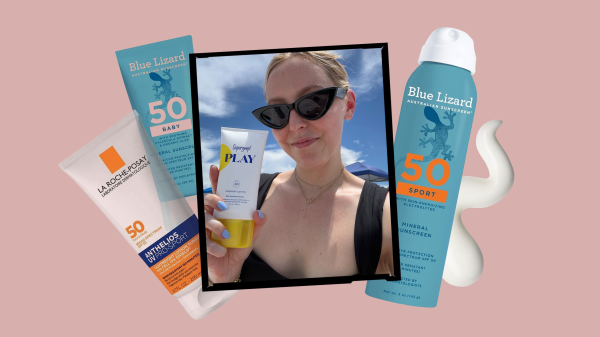
    A collage of an Allure editor holding a tube of Supergoop Play SPF 50 alongside other product silos on a pink backgroundCollage: Paula Balondo; Source images: Courtesy of brands and editorsSave StorySave this storySave StorySave this story

    Swimming and sweating are basically inevitable during warm weather—and you need sun protection that can keep up with your plans. That’s why the best water-resistant body sunscreens deserve a spot in your tote: They do what any good SPF can do, just with more staying power.

    Unlike traditional sunscreens, water-resistant sunscreens contain silicones, waxes, and other film-forming polymers that help the product cling to the skin in wet conditions, explains Michael Tassavor, MD, a board-certified dermatologist based in New York City. Luckily, you don’t have to parse lengthy ingredient lists to make sure your product of choice is legit. “By law, a sunscreen can only say 'water-resistant' if it's passed standardized testing,” Dr. Tassavor says. “Just look for that wording on the front.” And, like all sunscreens, your water-resistant pick should also provide broad-spectrum UV protection with a rating of 30 SPF or higher, per the American Academy of Dermatology Association (AAD).

    Our Top Water-Resistant Body Sunscreens

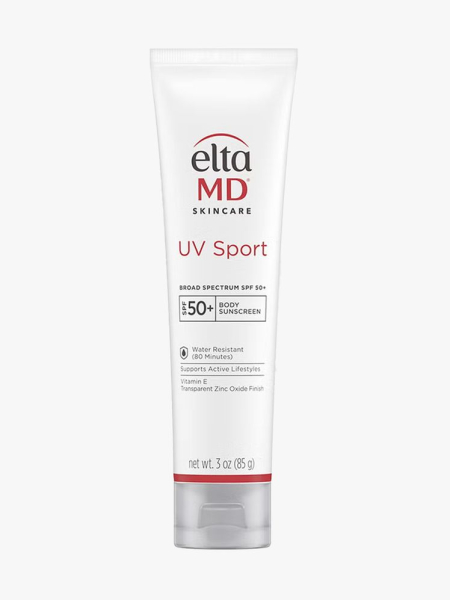
    • Best Overall: EltaMD UV Sport Sunscreen Lotion SPF 50, $32
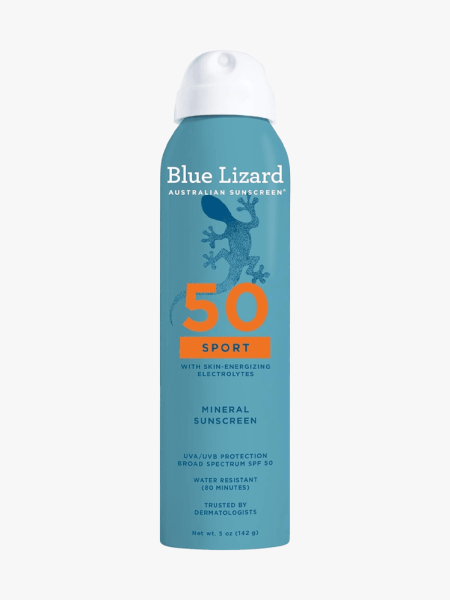
    • Best for Sensitive Skin: Blue Lizard Sport Mineral Sunscreen Spray SPF 50+, $20
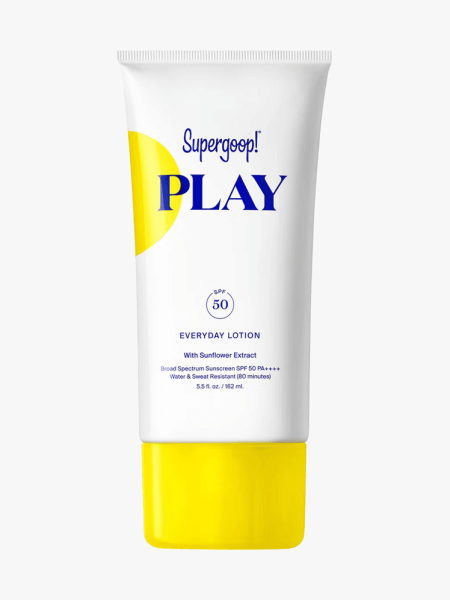
    • Best for Dry Skin: Supergoop Play Everyday Lotion SPF 50, $28
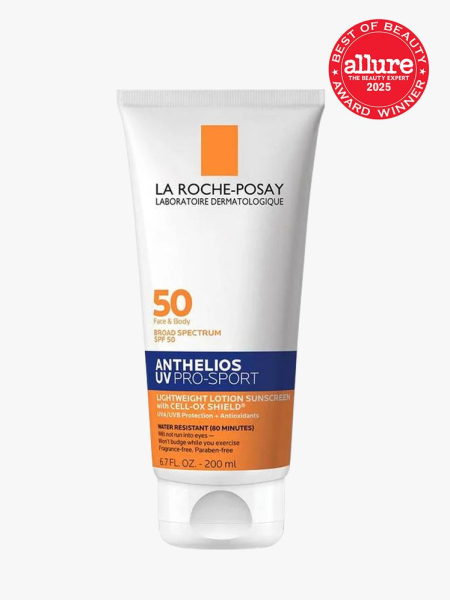
    • Best for Outdoor Activities: La Roche-Posay Anthelios UV Pro Sport SPF 50, $33

    However, you still need to reapply every two hours, regardless of how long the sunscreen is said to be water-resistant. That goes for reupping on SPF after swimming, too. “Reapply immediately after towel drying, even if the rated time hasn't elapsed,” says Sejal Shah, MD, a board-certified dermatologist based in New York City. And you should give the product enough time to absorb before heading out into the sunshine, according to Azadeh Shirazi, MD, a board-certified dermatologist based in La Jolla, California; about 20 minutes should do the trick.

    Frequently Asked QuestionsAccordionItemContainerButtonLargeChevron

    • What's the difference between waterproof and water-resistant?
    • Does water-resistant sunscreen actually work?
    • Meet the experts
    • How we test and review products
    • Our staff and testers

    Don’t sweat your sun protection routine this summer. These elegant, effective, and long-wearing formulas come highly recommended by editors and skin care experts.

    Best Overall: EltaMD UV Sport Sunscreen Lotion SPF 50

    EltaMD UV Sport Sunscreen Lotion SPF 50 in branded tube component on a light gray backgroundSave to wishlistSave to wishlist

    EltaMD

    UV Sport Sunscreen Lotion SPF 50

    $32

    Amazon

    $32

    EltaMD

    Allure contributing commerce editor Deanna Pai applying the EltaMD UV Sport Sunscreen Lotion SPF 50

    Deanna Pai

    Why we love it: If you've EltaMD’s sun-care line caters to a wide range of skin concerns and types, from dry to acne-prone. It should be no surprise, then, that the brand nailed it with its water-resistant formula, too. The UV Sport Sunscreen Lotion “holds up beautifully through sweat and water, and feels great on the skin,” Dr. Tassavor says. You can apply it to wet or dry skin, too; either way, it spreads and sinks in cleanly without the chalky or greasy residue you might expect from a “sport” sunscreen. The hybrid formula is powered by mineral filter zinc oxide and two chemical sunscreen ingredients, while vitamin E provides additional protection against free radicals, which contribute to signs of aging, hyperpigmentation, and skin cancer. Its fragrance-free formula plays well with sensitive skin and it’s non-comedogenic to boot, so you can use it on your face without worrying about clogged pores.

    Tester feedback from contributing commerce editor Deanna Pai

    AccordionItemContainerButtonLargeChevron

    “I'm a diehard runner—middle of winter, dead of summer, whatever—and while I wear a hat, I haven't always been diligent with my sun protection. This sunscreen has made it easy to stay consistent: It's quick to absorb, I can use it on both my face and body, and it doesn't turn into a greasy mess when I sweat. My only gripe is that I wish it came in a larger size since I go through it so quickly.” —Deanna Pai, contributing commerce editor

    More to know

    AccordionItemContainerButtonLargeChevron

    • Sunscreen type: chemical and mineral
    • Water resistance rating: 80 minutes
    • Key ingredients: zinc oxide 9%, octinoxate 7.5%, octisalate 5%, vitamin E
    • Fragrance-free: yes

    Best for Sensitive Skin: Blue Lizard Sport Mineral Sunscreen Spray SPF 50+

    Blue Lizard Sport Mineral Sunscreen Spray SPF 50+ in branded component on a light gray backgroundSave to wishlistSave to wishlist

    Blue Lizard

    Sport Mineral Sunscreen Spray SPF 50+

    $20 $15 (25% off)

    Amazon

    $19

    Target

    Allure senior commerce director Shanna Shipin applying the Blue Lizard Sport SPF 50 Spray Sunscreen

    Shanna Shipin

    Why we love it: For all the positives you hear about mineral sunscreen (it’s gentler on sensitive skin than chemical formulas, and some tinted versions can protect against melasma-causing visible light), it sometimes comes with the drawback that it feels heavy on the skin and leaves a white cast. Blue Lizard’s Sport Mineral Sunscreen Spray, however, makes it so you don’t have to compromise. It’s powered by zinc oxide, but all it needs is a quick rub to absorb into the skin. It dries clear and stays put—no telltale chalky residue in sight. Moisturizing glycerin keeps skin calm and nourished, and it’s alcohol-free, since alcohol can irritate and dry out sensitive skin. (FYI: Just make sure to spray it on outside slowly and carefully; otherwise, you might miss a few spots.)

    Tester feedback from senior commerce director Shanna Shipin

    AccordionItemContainerButtonLargeChevron

    “A spray mineral sunscreen that propels like a chemical? I've never—in all my years testing—come across one as effective as this. Upon first application, I knew this was special, especially if you're used to mineral sunscreens that squirt (in a womp-womp, and messy fashion) rather than shower your skin in SPF coverage. The spray is an even, broad mist that propels powerfully—you won't miss a spot with this kind of reach. It's among the fastest 'screens in my arsenal and is finally a sport mineral that is just as convenient and easy to apply as the chemical sunscreens I have.

    You really have to shake it up, then rub it into your skin. This isn't going to give you the perfect, truly invisible chemical spray at first—you may get some errant splotches (but they're tiny, I promise!). After spraying, you just need to remember to briefly rub it in before you go. Otherwise, you may have some uneven spots; when you're done, it dries down with zero white cast. On top of it all, there's an impressive 80 minutes of water-resistant coverage; right now, there isn't a better active or beach-day sunscreen for me and my family.” —Shanna Shipin, senior commerce director

    More to know

    AccordionItemContainerButtonLargeChevron

    • Sunscreen type: mineral
    • Water resistance rating: 80 minutes
    • Key ingredients: zinc oxide 24%, glycerin
    • Fragrance-free: yes

    Best for Dry Skin: Supergoop Play Everyday Lotion SPF 50

    Image may contain: Bottle, Cosmetics, Sunscreen, and LotionSave to wishlistSave to wishlist

    Supergoop

    Play Everyday Lotion SPF 50

    $28 $22 (21% off)

    Amazon

    $28

    Dermstore

    $28

    Ulta Beauty

    Allure beauty director Sarah Kinonen applying the Supergoop Play Everyday Lotion SPF 50

    Sarah Kinonen

    Why we love it: With a blend of soothing plant extracts, glycerin, and vitamin E, Supergoop’s Play sunscreen is packed with dry skin saviors, protecting your skin from sun damage and keeping it happy and hydrated in one fell swoop. It feels more like a moisturizer than a true sunscreen, thanks to its non-greasy, lightweight consistency that melts right into the skin (no white residue here). Plus, its subtle scent is refreshing rather than overpowering. Sounds like just the sort of supporting character we like to see in a sunscreen made for long days outdoors.

    Tester feedback from beauty director Sarah Kinonen

    AccordionItemContainerButtonLargeChevron

    “This is, hands down, one of my favorite body sunscreens. I’ve taken it all over the world—the sandy beaches of Florida, the Mediterranean Sea, and even the streets of Paris—and it’s consistently reliable. It blends in easily, doesn’t leave a cast, and most importantly for summer, it’s water-resistant, so I never get too worried about sun protection when I’m wearing it in the ocean or pool. (Obviously, I reapply immediately when I get out of the water!) I’m currently using it while on a trip to Florida, but I know this tube will go everywhere (and in any body of water!) with me this summer.” —Sarah Kinonen, beauty director

    More to know

    AccordionItemContainerButtonLargeChevron

    • Sunscreen type: chemical
    • Water resistance rating: 80 minutes
    • Key ingredients: homosalate 10%, octocrylene 7.5%, octisalate 5%, avobenzone 3%, glycerin, rice bran extract, sunflower oil extract
    • Fragrance-free: no

    Best for Outdoor Activities: La Roche-Posay Anthelios UV Pro Sport SPF 50

    La Roche-Posay Anthelios UV Pro-Sport Sunscreen SPF 50 in branded white and orange tube with cap on light gray background with red Allure Best of Beauty seal in the top right cornerSave to wishlistSave to wishlist

    La Roche-Posay

    Anthelios UV Pro Sport SPF 50

    $33

    La Roche-Posay

    Allure commerce editor Sarah Han applying the La Roche-Posay Anthelios UV Pro Sport SPF 50

    Sarah Han

    Why we love it: It’s one thing for sunscreen to stick around when you’re mainly lounging poolside—it’s another for it to stay in place when you’re running or working out in the heat. We gave La Roche-Posay’s Anthelios UV Pro Sport a Best of Beauty Award last year because it did just that. Dr. Shirazi gives it her seal of approval, too, for its combination of broad-spectrum protection and water resistance up to 80 minutes. It’s formulated to hold up during outdoor activities without staining your clothes or running into your eyes. Better yet, it absorbs fully into the skin with zero cast or tackiness, so you don’t have to worry about it melting into white streaks when you sweat or swim.

    Want more LRP sun care in your beach bag? Dr. Tassavor also recommends the brand’s Anthelios Melt-In Milk SPF 60 for its water resistance and phenomenal texture.

    Tester feedback from commerce editor Sarah Han

    AccordionItemContainerButtonLargeChevron

    “I am capital-T terrible at applying body sunscreen. But…I'm also somewhat of a homebody and can't stand being outside for long periods, especially in the summer. Since neither is a legit excuse to skip body SPF, I've been testing out a few formulas to see which one I can tolerate best, and La Roche-Posay is very up there—fitting, since I'll probably be bringing this French brand to the South of France when I'm there for a vacation-wedding-hybrid trip in August, which definitely includes some pool and beach time. It feels nourishing as soon as it touches my skin, softening every inch and leaving a slight glow and brightening my tattoos (bonus!). It's not the lightest, nor is it the thickest—while it takes a beat to rub in, it doesn't leave me with a heavy feeling. Good stuff!” —Sarah Han, commerce editor

    More to know

    AccordionItemContainerButtonLargeChevron

    • Sunscreen type: chemical
    • Water resistance rating: 80 minutes
    • Key ingredients: homosalate 13%, octocrylene 10%, octisalate 5%, avobenzone 3%, glycerin, hyaluronic acid
    • Fragrance-free: yes

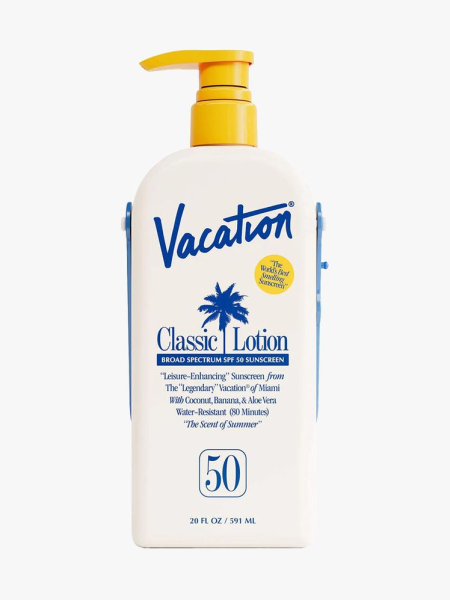
    Best Scent: Vacation Classic Lotion SPF 50

    A bottle of Vacation Classic Lotion SPF 50 on a light gray backgroundSave to wishlistSave to wishlist

    Vacation

    Classic Lotion SPF 50

    $48

    Amazon

    $48

    Nordstrom

    $48

    Dermstore

    Pai applying the Vacation Classic Lotion SPF 50

    Deanna Pai

    Why we love it: Vacation’s Classic Lotion elevates your everyday sun protection routine with its dreamy scent of summer getaways past. Its nostalgic notes include coconut, banana, pool water, and literal swimsuit Lycra. But its fragrance isn’t the only thing that lasts. It blends well and protects skin for up to 80 minutes of sweating. Its nourishing, moisturizing ingredients (hello, shea butter and coconut oil) prevent your skin from drying out, while calming niacinamide helps brighten and calm skin. You’ll come for the vibey scent, but the great-for-your-skin formula will keep you coming back for more.

    Tester feedback from Pai

    AccordionItemContainerButtonLargeChevron

    “I keep a large bottle of this sunscreen next to our side door, so my whole family can sunscreen up before we head to the park or out for a walk. I love that it blends in quickly onto my olive skin, doesn’t feel greasy, and actually smells amazing—beachy, but not in a way that feels cloying or overly sweet. It’s made me a lot more consistent with applying sunscreen to my arms and legs, and has spared my very pale husband’s neck this summer.” —Deanna Pai, contributing commerce editor

    More to know

    AccordionItemContainerButtonLargeChevron

    • Sunscreen type: chemical
    • Water resistance rating: 80 minutes
    • Key ingredients: homosalate 9.8%, octocrylene 9.5%, octisalate 4.9%, avobenzone 2.8%, aloe vera, shea butter, coconut oil
    • Fragrance-free: no

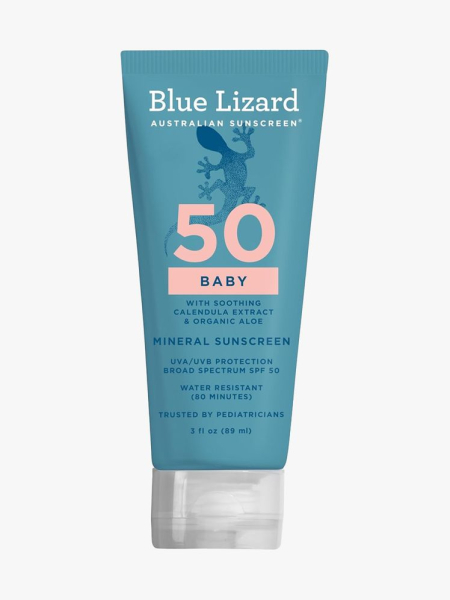
    Best for Kids: Blue Lizard Baby Mineral SPF 50

    Blue Lizard Baby Mineral SPF 50 in branded tube component on a light gray backgroundSave to wishlistSave to wishlist

    Blue Lizard

    Baby Mineral SPF 50

    $11 $10 (9% off)

    Amazon

    Why we love it: The gentle formula of Blue Lizard’s Baby Mineral sunscreen is why Dr. Tassavor loves it for littles; babies, toddlers, and kids have thinner, more sensitive skin than adults, so it’s important to find a sunscreen made without common allergens like fragrances, dyes, or parabens. It has plenty of kid-friendly ingredients like aloe vera and calendula (a.k.a marigold) extract, which have a calming effect, but none of the stuff that’s most likely to irritate their delicate skin. But don’t feel left out: Dr. Tassavor adds that anyone with sensitive skin can use it, too. There’s no age limit on sunscreen, except for infants younger than six months old. The American Academy of Pediatrics recommends holding off on sunscreen until they pass this benchmark for safety reasons.

    More to know

    AccordionItemContainerButtonLargeChevron

    • Sunscreen type: mineral
    • Water resistance rating: 80 minutes
    • Key ingredients: zinc oxide 10%, titanium dioxide 8%, aloe vera, calendula extract, glycerin,
    • Fragrance-free: yes

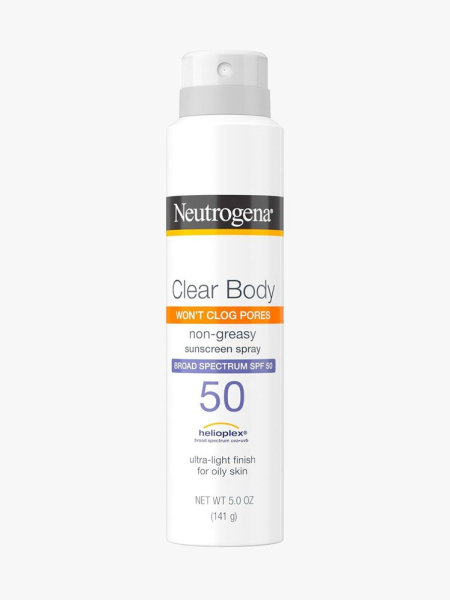
    Best Spray: Neutrogena Clear Body SPF 50 Sunscreen Spray

    Neutrogena Clear Body SPF 50 Sunscreen Spray in branded component on a light gray backgroundSave to wishlistSave to wishlist

    Neutrogena

    Clear Body SPF 50 Sunscreen Spray

    $14 $12 (14% off)

    Amazon

    Why we love it: If reapplying lotion mid-beach day feels like a chore, Neutrogena’s Clear Body Sunscreen Spray has got you covered. It blends easily and leaves behind a dry, matte finish that lasts—kind of like you aren’t wearing sunscreen at all. Its quick-drying feel is thanks to the alcohol in its formula, the drying effects of which are offset by added hydrators and skin-soothers niacinamide and vitamin E. One thing to note: As quick, clean, and convenient as the application process of spray sunscreen is, it’s important to spray it on slowly, staying close to the skin, and rub it in completely. Otherwise, you won’t get full coverage and protection.

    More to know

    AccordionItemContainerButtonLargeChevron

    • Sunscreen type: chemical
    • Water resistance rating: 80 minutes
    • Key ingredients: homosalate 10%, octocrylene 10%, octisalate 5%, avobenzone 3%, niacinamide, vitamin E
    • Fragrance-free: yes

    Frequently asked questions

    What's the difference between waterproof and water-resistant?

    Well, waterproof sunscreens simply don’t exist. “‘Waterproof’ implies that a sunscreen remains fully effective indefinitely in water, which isn't realistic,” Dr. Shah says, adding that many countries (including the U.S.) don’t allow brands to label sunscreens as “waterproof” because it’s so misleading.

    Water-resistant sunscreens, on the other hand, go through a clear-cut process to verify their effecacy—although they do have to be reapplied. Dr. Shah explains that the FDA only permits two time periods of water resistance on products: 40 and 80 minutes. A 40-minute rating means the sunscreen will retain its SPF for up to 40 minutes of water exposure or immersion, while an 80-minute rating indicates that the SPF will last for up to 80 minutes.

    Does water-resistant sunscreen actually work?

    If you apply it as directed (and as often as is recommended), a water-resistant sunscreen will protect your skin just as effectively as one that isn’t, Dr. Shirazi says. And if things get wet, it’ll do an even better job. “A standard sunscreen starts breaking down the moment you get in the water or sweat, while a water-resistant one is built to hold its SPF,” Dr. Tassavor says. But, again, it won’t hold onto it forever. So, for thorough protection from sun damage and photoaging, always reapply after your damp activity of choice.

    Meet the experts

    • Sejal Shah, MD, a board-certified dermatologist based in New York City
    • Azadeh Shirazi, MD, FAAD, a board-certified dermatologist based in La Jolla, California
    • Michael Tassavor, MD, MS, a board-certified dermatologist based in New York City

    How we test and review products

    We always enlist a range of testers for our makeup vertical, but, for example, hair-care products and tools are another story. While some hair products can be used across different textures, lengths, curl patterns, thicknesses, and colors (natural and unnatural), they are often created with specific consumers in mind. Many are formulated to address a concern (dandruff, breakage, brittleness) or to work most effectively for a specific hair type (4C curls, wavy hair, gray hair). You wouldn’t want to pick up a purple shampoo that’s only been reviewed by someone with, say, auburn hair, or a diffuser that’s never been tested by anyone with curls, right?

    And for our reviews of the best water-resistant sunscreens, we enlisted the help of multiple editors, writers, contributors, cosmetic chemists, and makeup artists with a range of experience studying and using these products. Testers considered performance across four primary categories: efficacy, texture, experience, and formula. For more on what's involved in our reporting, check out our complete reviews process and methodology page.

    Our staff and testers

    A beauty product is a personal purchase. You might be searching for a face cream to address persistent dryness or a new nail product to add to your Sunday self-care routine; you may simply be browsing around for the latest launches to hit the hair market. No matter what you seek or your individual needs and concerns, Allure wants to ensure that you love anything we recommend in our stories. We believe that having a diverse team of writers and editors—in addition to the wide range of outside testers and industry experts we regularly call upon—is essential to reaching that goal.

    After all, can we really say a skin-care product is the “best” for people over 50 if the only testers we’ve solicited opinions from are folks who have yet to hit 30? Can we honestly deem a high-end diffuser worthy of your hard-earned cash if it’s never been tested on curls? We’re proud that our staff spans a wide range of ages, skin tones, hair textures, genders, and backgrounds, which means that we are able to fairly assess any beauty product that comes into the beauty closet.

  • Vanessa Hudgens’s Pickle Nails Are a Really Big Dill

    Vanessa Hudgens’s Pickle Nails Are a Really Big Dill

    Vanessa Hudgens smiling and wearing braids and glassesPhoto: Getty ImagesSave StorySave this storySave StorySave this story

    Oh, you hadn't heard? We're right smack dab in the middle of pickle girl summer. Popsicle by the pool? No, thanks—I'll take an ice-cold half-sour. And I may even reach into the jar with a manicure inspired by Vanessa Hudgens's latest pickle-inspired nail look.

    Nail artist Zola Ganzorigt posted a reel to Instagram that her followers can instantly recognize as signature Hudgens: a cat-eye mani displayed on fingers folded over onto long sleeves. But while the actor has been known to dabble in more neutral hues of the shimmering effect, this new shade is a vibrant, vinegary departure. It's what Ganzorigt is simply dubbing “pickle summer” nails.

    The long, almond manicure is a yellowy-green cat-eye shade that launched a debate among Allure editors trying to determine exactly which kind of pickle provided the inspo color. Kosher dill? Full sour? Bread and butter? Cornichon? Whatever the muse, it left everyone wanting a pickle.

    Instagram content

    Even before this manicure, pickles have been finding their unlikely way into the beauty world lately. Burt's Bees collaborated with Grillo's Pickles on a pickle-flavored lip balm not long after E.L.F. launched a dill version of its Glow Reviver Melting Lip Balm.

    And while pickles may not be taking over perfume the way banana currently is (and let's be so for real right now—even pickle devotees can agree that's probably for the best), there's no reason to not work their briny tones into eye shadow looks and manicures, especially when you can put a glamorous, shimmering spin on them.

  • Are Drugstore Sunscreens As Good As Luxury Sunscreens?

    Are Drugstore Sunscreens As Good As Luxury Sunscreens?

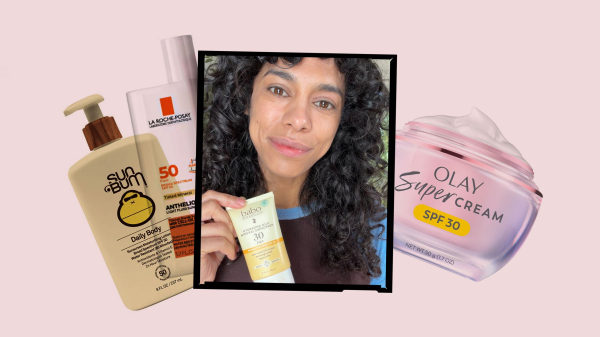
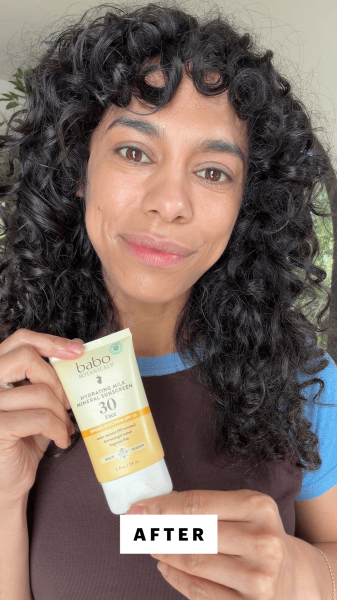
    A collage of Allure senior commerce director Shanna Shipin holding the Babo Botanicals Hydrating Milk Mineral Face...Collage: Paula Balondo; Source images: Courtesy of Allure editors and brandsSave StorySave this storySave StorySave this story

    The best drugstore sunscreens have come a long way in proving that effective sun protection doesn’t have to come with a luxury price tag. Simply put: “If a sunscreen is properly tested, broad-spectrum and used correctly, it doesn’t need to be expensive to be effective,” says Kseniya Kobets, MD, a board-certified dermatologist in New York. In fact, these Allure-approved SPF formulas also offer elegant textures, invisible finishes, and ingredient lists packed with skin-care heavy hitters on top of strong broad-spectrum protection from UV rays.

    That’s good news for your wallet, especially considering how much sunscreen you’re supposed to use. “A shot-glass amount is enough to cover the whole body, and about a nickel- or quarter-size dollop is needed for the face and neck,” says Elizabeth K. Hale, MD, a board-certified dermatologist in New York City. Translation: If you’re applying SPF correctly, you’ll go through your bottle faster than you’d think, which makes finding a drugstore option all the more appealing.

    Our Top Drugstore Sunscreens

    • Best Overall for Face: La Roche-Posay Anthelios Mineral Tinted Ultra-Light Fluid SPF 50, $40
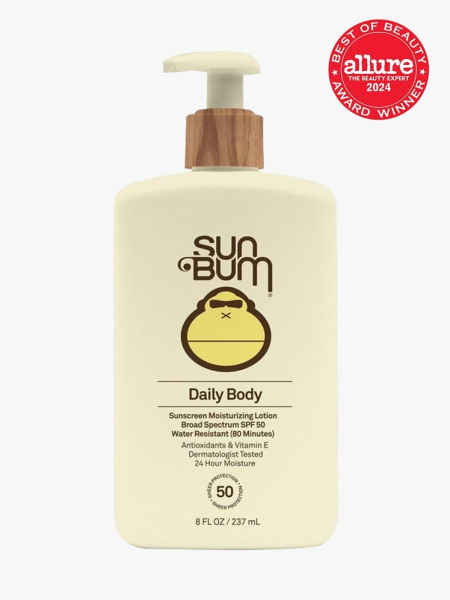
    • Best Overall for Body: Sun Bum Daily 50 Body Lotion, $24
    • Best for Oily Skin: Neutrogena Ultra Sheer Invisible Gel Face Sunscreen SPF 40, $11
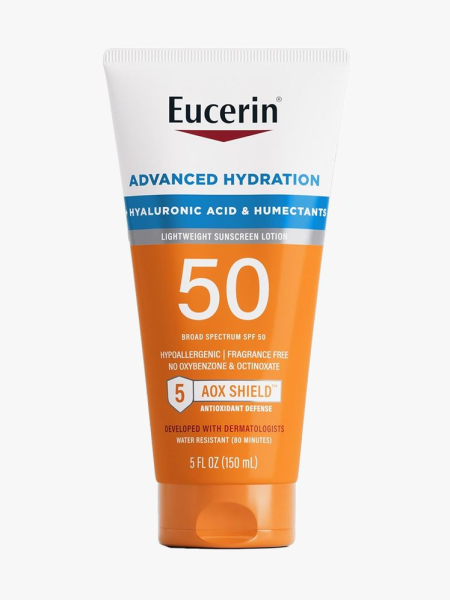
    • Best for Dry Skin: Eucerin Ultra Light-Fluid Advanced Hydration Sunscreen SPF 50, $16
    • Best Moisturizer with SPF: Olay Super Cream With Sunscreen SPF 30, $35

    Frequently Asked QuestionsAccordionItemContainerButtonLargeChevron

    • What should you look for in a drugstore sunscreen?
    • Are mineral or chemical sunscreens better?
    • What’s the benefit of a drugstore sunscreen?
    • Meet the experts
    • How we test and review products
    • Our staff and testers

    Considering there are plenty of SPF options out there—especially when you factor in face sunscreens, body sunscreens, chemical and mineral sunscreens, sticks, sprays, and more—you can start here if you don’t know where to begin. These are the best drugstore sunscreens that are Allure editor- and dermatologist-approved and won’t break the bank.

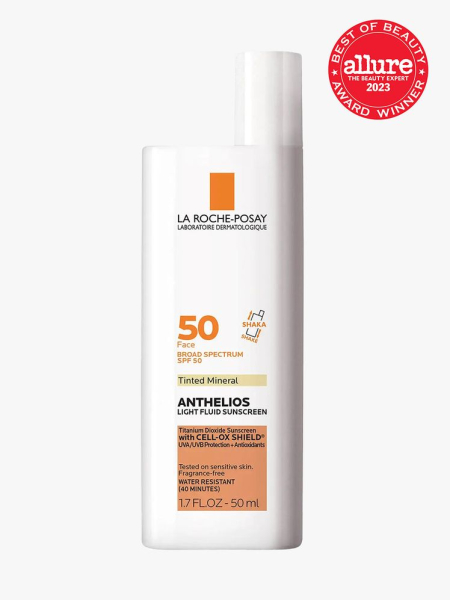
    Best Overall for Face: La Roche-Posay Anthelios Mineral Tinted Ultra-Light Fluid SPF 50

    La Roche-Posay Anthelios Mineral Tinted Ultra Light Face Sunscreen Fluid SPF 50 white rectangle bottle with cap to the right on light gray background with red Allure Best of Beauty seal in the top right cornerSave to wishlistSave to wishlist

    La Roche-Posay

    Anthelios Mineral Tinted Ultra-Light Fluid SPF 50

    $40

    La Roche-Posay

    Allure commerce editor Sarah Han applying the La Roche-Posay Anthelios Mineral Tinted Ultra-Light Fluid SPF 50 in Light

    Sarah Han

    Why we love it: La Roche-Posay is, undoubtedly, one of our favorite French pharmacy brands, especially when it comes to (but not limited to) SPFs—and the Anthelios Mineral Tinted Ultra-Light Fluid SPF 50 is a prime example. Countless dermatologists and editors have touted this extra gentle, soothing-thermal-water-infused formula over the years, cementing its “tried-and-true” status. Made with titanium dioxide and zinc oxide, this mineral tinted sunscreen protects against UVA and UVB rays as well as visible light (which can cause hyperpigmentation and contribute to skin aging), it has a milky texture that melts into skin, doesn’t leave any greasy residue behind, and offers ample antioxidant protection. “It provides broad-spectrum protection in a lightweight fluid texture that layers well under makeup,” Dr. Kobets affirms. “The tint helps blend more naturally into the skin while providing additional protection against visible light.” Speaking of the tint, it’s also available in four shades to be more flexible across several skin tones.

    A selfie of Allure commerce editor Sarah Han before applying the La RochePosay Anthelios Mineral Tinted UltraLight Fluid...

    Han before applying the La Roche-Posay Anthelios Mineral Tinted Ultra-Light Fluid SPF 50 in Light

    Sarah HanA selfie of Allure commerce editor Sarah Han after applying the La RochePosay Anthelios Mineral Tinted UltraLight Fluid...

    Han after applying the La Roche-Posay Anthelios Mineral Tinted Ultra-Light Fluid SPF 50 in Light

    Sarah Han

    Tester feedback from commerce editor Sarah Han

    AccordionItemContainerButtonLargeChevron

    “My biggest hesitations about mineral sunscreens are white cast (and mind you, I'm pretty light-toned, so it's not even a huge barrier compared to others) and pilling. I only have a handful of mineral SPFs that pass the test and this La Roche-Posay sunscreen is one of them. It took me a while to finally try it out, but after hearing so many peers and derms rave about it, I finally did—and I've been super impressed. It leaves my skin feeling soft and looking natural, but not too matte or flat. The coverage is super even and the light shade makes my skin look slightly tanned, which is a nice bonus. Most importantly, no pilling, regardless of whether or not I wear it alone or under makeup. Two thumbs up!” —Sarah Han, commerce editor

    Tester feedback from Allure contributor Catharine Malzahn

    AccordionItemContainerButtonLargeChevron

    “I’ve gone through so many bottles of this tinted mineral SPF that I’ve lost count—it’s been one of my go-to sunscreens for years, both for daily use and on vacation. It has an incredibly lightweight feel, absorbs quickly, and doesn’t leave any greasy residue. It also layers well under makeup—I’ve never experienced any pilling or patchiness, and the tinted formula means I never have to worry about it leaving a white cast. When I first started using it years ago, there was only one shade available that would look a little orange on my pale skin; I’m excited that there are several shades available now that work across skin tones.” —Catharine Malzahn, contributor

    More to know

    AccordionItemContainerButtonLargeChevron

    • Type: mineral
    • Key ingredients: titanium dioxide (17%), zinc oxide (8%; not included in the lightest tinted shade), Cell-Ox B3 Shield Technology, iron oxides, vitamin E
    • Water-resistant: no

    Best Overall for Body: Sun Bum Daily Body Lotion SPF 50

    Sun Bum Daily 50 Body Lotion branded yellow bottle component with brown accents on a light gray background with red Allure Best of Beauty seal in the top right cornerSave to wishlistSave to wishlist

    Sun Bum

    Daily Body Lotion SPF 50

    $24

    Ulta Beauty

    Why we love it: When your body sunscreen is chock-full of good-for-you ingredients, it becomes an extension of your skin-care routine rather than a separate step you need to remember. Sun Bum’s Daily Body Lotion SPF 50 was formulated with that exact sentiment in mind. Packed with vitamin C to boost radiance, vitamin E to moisturize, and antioxidants to combat environmental stress, the Best of Beauty winner offers major hydration so you can do more than just protect your skin from damaging UV rays. The broad-spectrum formula is water-resistant for up to 80 minutes, making it a great choice if you’ll be swimming or sweating (just don’t forget to reapply!). "I love how it's in a regular lotion pump bottle and rubs in nicely," our tester said. "Plus, it smells like banana candy. So good!"

    More to know

    AccordionItemContainerButtonLargeChevron

    • Type: chemical
    • Key ingredients: avobenzone (3%), homosalate (8%), octisalate (5%), octocrylene (9%), vitamin E, antioxidants
    • Water-resistant: yes (80 minutes)

    Best for Dry Skin: Eucerin Ultra Light-Fluid Advanced Hydration Sunscreen SPF 50

    Eucerin Ultra Light-Fluid Advanced Hydration Sunscreen SPF 50 in branded tube component on a light gray backgroundSave to wishlistSave to wishlist

    Eucerin

    Ultra Light-Fluid Advanced Hydration Sunscreen SPF 50

    $16

    Amazon

    Allure beauty director Sarah Kinonen applying the Eucerin Ultra Light-Fluid Advanced Hydration Sunscreen SPF 50

    Sarah Kinonen

    Why we love it: Dry skin benefits from a sunscreen that does more than just protect; it should actively boost hydration throughout the day. That’s where Eucerin’s Ultra Light-Fluid Advanced Hydration Sunscreen SPF 50 steps in. Thirsty skin will appreciate that this lightweight formula contains hyaluronic acid and humectants to hydrate from within, as well as draw in additional moisture. What’s more, it also helps to protect skin against long-term sun damage with the inclusion of the brand’s 5 AOX Shield Technology, which is made up of five different antioxidants (vitamin E, vitamin C, and glycyrrhetinic acid, to name a few). Despite coming with all these skin-care benefits, it manages to remain feeling weightless on the skin, absorbing quickly and blending in seamlessly, so it can be worn on its own or under makeup.

    Kinonen before applying the Eucerin Ultra LightFluid Advanced Hydration Sunscreen SPF 50

    Kinonen before applying the Eucerin Ultra Light-Fluid Advanced Hydration Sunscreen SPF 50

    Sarah KinonenKinonen after applying the Eucerin Ultra LightFluid Advanced Hydration Sunscreen SPF 50

    Kinonen after applying the Eucerin Ultra Light-Fluid Advanced Hydration Sunscreen SPF 50

    Sarah Kinonen

    Tester feedback from Allure beauty director Sarah Kinonen

    AccordionItemContainerButtonLargeChevron

    tk

    More to know

    AccordionItemContainerButtonLargeChevron

    • Type: chemical
    • Key ingredients: avobenzone (3%), homosalate (9%), octisalate (4.5%), octocrylene (9%), hyaluronic acid
    • Water-resistant: no

    Best for Sensitive Skin: Babo Botanicals Hydrating Milk Mineral Face Sunscreen SPF 30

    Babo Botanicals Hydrating Milk Mineral Face Sunscreen SPF 30 in branded tube component on a light gray backgroundSave to wishlistSave to wishlist

    Babo Botanicals

    Hydrating Milk Mineral Face Sunscreen SPF 30

    $25

    Amazon

    Allure senior commerce director Shanna Shipin applying the Babo Botanicals Hydrating Milk Mineral Face Sunscreen SPF 30

    Shanna Shipin

    Why we love it: Sensitive skin can be picky when it comes to sunscreen—breakouts, irritation, and redness are all possibilities—so if your skin is reactive, opt for a gentle, fragrance-free mineral formula like Babo Botanicals Hydrating Milk Mineral Face Sunscreen SPF 30. (Dermatologists recommend mineral-based sunscreens for sensitive skin in general, as mineral UV filters can be gentler since they sit on top of the skin rather than penetrating it.) Powered by zinc oxide, it provides water-resistant, broad-spectrum protection and has a lightweight, milky texture that applies smoothly and easily. In fact, it feels more like a nourishing moisturizer than a traditional mineral sunscreen (read: no chalkiness here), leaving behind a natural, dewy finish. In addition to the zinc oxide, it’s infused with plant-based emollients, skin soothers like chamomile and calendula, and zero fragrance, so it won’t set off your skin.

    Shipin before applying the Babo Botanicals Hydrating Milk Mineral Face Sunscreen SPF 30

    Shipin before applying the Babo Botanicals Hydrating Milk Mineral Face Sunscreen SPF 30

    Shanna ShipinShipin after applying the Babo Botanicals Hydrating Milk Mineral Face Sunscreen SPF 30

    Shipin after applying the Babo Botanicals Hydrating Milk Mineral Face Sunscreen SPF 30

    Shanna Shipin

    Tester feedback from Allure senior commerce director Shanna Shipin

    AccordionItemContainerButtonLargeChevron

    “I love a brand that I can use for myself and my kids, and Babo Botanicals makes great sensitive-skin-friendly products that are affordable enough to use on the whole family. This sunscreen leaves no white cast and wears so comfortably on the skin—I was surprised at how elegant it felt when I first applied it, despite being something I could buy at the grocery store. When I spoke with Babo Botanicals' team, they told me they created the formula with all seasons in mind. Sure, I live in Los Angeles and it can feel like there's essentially one season here, but the point is that the all-seasonality makes it comfortable to wear when it’s hot, cold, dry, or humid—you get the picture. My skin usually starts to feel suffocated when I layer too many formulas over it, and I'm happy to say that this sits nicely on top of my moisturizer and under my makeup. (And when I wear it without makeup, it leaves a pretty glow.) The only issue I found is that I stuffed one tube in my diaper bag, and it got absolutely smushed, causing one end to burst open and splatter—thankfully, it's not a super oily mineral product, so it washed out just fine.“ —Shanna Shipin, senior commerce director

    More to know

    AccordionItemContainerButtonLargeChevron

    • Type: mineral
    • Key ingredients: zinc oxide (17%), chamomile, calendula, passion fruit piceatannol ferment
    • Water-resistant: yes (40 minutes)

    Best for Moisturizer with SPF: Olay Super Cream With Sunscreen SPF 30

    Olay Super Cream With Sunscreen SPF 30 in branded holographic jar with white lid on light gray background with red Allure Best of Beauty seal in the top right cornerSave to wishlistSave to wishlist

    Olay

    Super Cream With Sunscreen SPF 30

    $35 $31 (11% off)

    Amazon

    Allure beauty director Sarah Kinonen applying the Olay Super Cream with Sunscreen SPF 30

    Sarah Kinonen

    Why we love it: Moisturizers with SPF combine two essential skin-care steps into one, protecting against UV damage while delivering lasting hydration, moisture, and firming- and radiance-boosting benefits. Good news: Drugstore classic, the Olay Super Cream Sunscreen SPF 30, delivers on all fronts. The multitasking Best of Beauty Award winner combines chemical UV filters with ingredients commonly found in potent serums (like this cream’s beloved cousin, Super Serum), including vitamins C and E, hyaluronic acid, niacinamide, and collagen peptides. Together, they help hydrate, plump, firm, and visibly smooth. Best of all, it absorbs without a white cast or greasy residue, and leaves skin looking bright, radiant, and supple throughout the day.

    Image may contain Face Happy Head Person Smile Blonde Hair Teen Photography and Portrait

    Kinonen before applying the Olay Super Cream with Sunscreen SPF 30

    Sarah KinonenImage may contain Head Person Face Body Part Finger Hand Adult Cosmetics Happy Smile Bottle Perfume and Makeup

    Kinonen after applying the Olay Super Cream with Sunscreen SPF 30

    Sarah Kinonen

    Tester feedback from Kinonen

    AccordionItemContainerButtonLargeChevron

    “I'm not usually a multiuse skin care kinda girl. I like my products to do one and one thing only. But lately, because it's so hot outside and I'm usually running late (oops), two-in-ones don't sound so bad. Hence why I've been using the Olay Super Cream SPF 30 on days when I simply just Can Not. It's rich but easily blendable, doesn't leave behind a cast, and has a decent SPF level my dermatologist would approve of. What's not to like?” —Sarah Kinonen, beauty director

    More to know

    AccordionItemContainerButtonLargeChevron

    • Type: chemical
    • Key ingredients: avobenzone (3%), homosalate (9%), octisalate (4.5%), octocrylene (6%), hyaluronic acid, niacinamide, collagen peptides, vitamin C, vitamin E
    • Water-resistant: no

    Best for Oily Skin: Neutrogena Ultra Sheer Invisible Gel Face Sunscreen SPF 40

    Neutrogena Ultra Sheer Invisible Gel Face Sunscreen SPF 40 in branded tube component on a light gray backgroundSave to wishlistSave to wishlist

    Neutrogena

    Ultra Sheer Invisible Gel Face Sunscreen SPF 40

    $19 $11 (42% off)

    Amazon

    $23

    Ulta Beauty

    Why we love it: Gel sunscreens and oily skin are a match made in heaven. Rather than cream formulations that rely on heavier emollients, gel-based sunscreens are water-based, more lightweight, and absorb quickly with no residue. Neutrogena Ultra Sheer Invisible Gel Face Sunscreen SPF 40 caters to that exactly: The water-resistant gel SPF defends against the sun and won’t leave behind a greasy film or compete with your makeup—the matte finish actually works well under foundation, even acting as a makeup primer to smooth skin. But just because it mattifies doesn’t mean it’s drying—the velvety-touch sunscreen still moisturizes and protects skin with antioxidant vitamin E and hydrogenated castor oil.

    More to know

    AccordionItemContainerButtonLargeChevron

    • Type: chemical
    • Key ingredients: avobenzone (3%), homosalate (15%), octisalate (5%), octocrylene (10%), Helioplex Technology, vitamin E
    • Water-resistant: yes (80 minutes)

    Best Spray Sunscreen: Banana Boat 360 Coverage Sport Sunscreen Mist SPF 50+

    sunscreen mist in branded orange and blue bottle on light gray background with red and white 2024 allure best of beauty sealSave to wishlistSave to wishlist

    Banana Boat

    360 Coverage Sport Sunscreen Mist SPF 50+

    $15 $9 (40% off)

    Amazon

    Why we love it: Spray sunscreens are hard to beat when it comes to convenience: They make application and re-application infinitely faster and easier than their lotion counterparts. Allure Best of Beauty winner Banana Boat 360 Coverage Sport Sunscreen Mist SPF 50+ takes that convenience a step further with a smart nozzle that lets you switch between a continuous spray for larger areas and shorter bursts for smaller, harder-to-reach spots (it’s also aerosol-free). Plus, the broad-spectrum chemical formula goes on lightweight and virtually invisible on all skin tones, with none of the sticky, greasy feeling that can make wearing body sunscreen feel like a chore. Water-resistant for up to 80 minutes, it’s perfect for beach days and any outdoor activities that involve swimming or sweating.

    More to know

    AccordionItemContainerButtonLargeChevron

    • Type: chemical
    • Key ingredients: avobenzone (2.7%), homosalate (9%), octisalate (4.5%), octocrylene (7%)
    • Water resistant: yes (80 minutes)

    Frequently asked questions

    What should you look for in a drugstore sunscreen?

    I look for broad-spectrum protection, meaning there’s coverage against both UVB rays, which cause sunburn, and UVA rays, which contribute to pigmentation, melasma, and premature aging,” says Dr. Kobets. The label on the sunscreen will clearly state if it’s broad-spectrum. In addition to a broad-spectrum sunscreen, dermatologists and the American Academy of Dermatology (AAD) also recommend wearing a formula that’s SPF 30 or higher.

    If you’ll be sweating or exposed to water, make sure to choose a water-resistant sunscreen. Like with broad-spectrum, the label on the bottle will clearly state if it’s water-resistant (usually, sunscreens are water-resistant for 40 or 80 minutes). If the label doesn’t mention anything about water resistance, that means it’s not.

    Beyond the SPF number and other features on the label, cosmetic elegance matters more than you may realize. “If a sunscreen feels greasy, pills under makeup, or leaves a cast that someone dislikes, they’re less likely to apply enough or reapply consistently,” says Dr. Kobets. So, it’s a good idea to try several formulas until you find the one you really enjoy.

    For those dealing with hyperpigmentation, consider tinted sunscreens that contain iron oxides, which help protect against visible light in addition to UV rays. It’s “an important consideration for people suffering from melasma or conditions like lupus or sun-induced rashes,” says Serena Mraz, MD, a double board-certified dermatologist at Solano Dermatology and Associates in Vallejo, CA.

    Another factor worth considering is skin type. Fortunately, “many drugstore brands now offer excellent formulations tailored to a variety of skin types, including sensitive, acne-prone, oily, and mature skin,” notes Dr. Kobets, making it easier than ever to find an SPF that fits your individual needs. Overall, sensitive skin types may want to gravitate toward mineral formulas containing zinc oxide or titanium dioxide, which both Dr. Kobets and Dr. Mraz say are typically well-tolerated. Those with melasma or hyperpigmentation should consider tinted sunscreens with iron oxides for added protection against visible light. Meanwhile, oily or acne-prone skin types may prefer lightweight fluids and gels that are noncomedogenic and won’t feel heavy throughout the day. For mature or dry skin, look for hydrating and moisturizing ingredients like hyaluronic acid, glycerin, ceramides, and niacinamide.

    Are mineral or chemical sunscreens better?

    One isn’t better than the other, necessarily (the best sunscreen is the one you’ll actually wear). While Dr. Mraz strongly advocates for mineral sunscreens and notes that “patients with sensitive skin tend to do much better with mineral-based sunscreens, which include zinc oxide, titanium dioxide, and iron oxide,” other doctors take a more flexible approach.

    “I generally gravitate toward mineral sunscreens, especially for patients with sensitive skin, rosacea, eczema, acne-prone skin, melasma, or those recovering from cosmetic procedures,” says Dr. Kobets. However, mineral sunscreens aren’t for everyone. “Some people dislike the texture or white cast associated with mineral formulas and may do better with a chemical sunscreen,” adds Dr. Kobets. “In those cases, a chemical sunscreen is absolutely appropriate if it encourages consistent use.”

    Dr. Hale agrees with the flexible take and wouldn’t say that one is better than the other. “At this point, I would say that both physical and chemical sunscreens are safe and they are effective,” she says. In fact, she notes that hybrid formulas containing both chemical and mineral SPF actives can sometimes offer the best of both worlds, since combining the two can help avoid white cast and offer broad-spectrum protection.

    What’s the benefit of a drugstore sunscreen?

    As with any sunscreen, the best drugstore sunscreens protect skin against harmful UV rays, of course. Simply put, “wearing daily sunscreen is the best way to slow down development of skin cancer and premature aging of the skin,” says Dr. Hale. But drugstore sunscreens offer so much more than just protection. One of the biggest advantages of drugstore sunscreen is accessibility. “Drugstore sunscreens are widely available, affordable, and easy to replace, which encourages consistent daily use and reapplication,” says Dr. Kobets. Dr. Mraz agrees, noting that “more affordable cost is the predominant overarching advantage over a more expensive department store sunscreen.”

    Dr. Hale also points out another benefit that could be overlooked: volume. Because of the importance of applying and re-applying enough sunscreen, buying a more affordable option often makes practical sense. “There may be some merit in getting a less expensive sunscreen, where you’re getting more quantity of it for the same price,” she says. If a lower price point makes you more likely to apply the recommended amount and reapply throughout the day, that’s ultimately what matters most.

    Meet the experts

    • Elizabeth K. Hale, MD, is a clinical associate professor of dermatology at NYU Langone Health, senior vice president of the Skin Cancer Foundation, and board-certified dermatologist in New York City.
    • Kseniya Kobets, MD, is a board-certified dermatologist and Director of Cosmetic Dermatology at Montefiore Einstein Advanced Care in New York.
    • Serena Mraz, MD, is a double board-certified dermatologist at Solano Dermatology and Associates in Vallejo, California.

    How we test and review products

    We always enlist a range of testers for our makeup vertical, but, for example, hair-care products and tools are another story. While some hair products can be used across different textures, lengths, curl patterns, thicknesses, and colors (natural and unnatural), they are often created with specific consumers in mind. Many are formulated to address a concern (dandruff, breakage, brittleness) or to work most effectively for a specific hair type (4C curls, wavy hair, gray hair). You wouldn’t want to pick up a purple shampoo that’s only been reviewed by someone with, say, auburn hair, or a diffuser that’s never been tested by anyone with curls, right?

    And for our reviews of the best drugstore sunscreens, we enlisted the help of multiple editors, writers, contributors, cosmetic chemists, and makeup artists with a range of experience studying and using these products. Testers considered performance across four primary categories: efficacy, texture, experience, and formula. For more on what's involved in our reporting, check out our complete reviews process and methodology page.

    Our staff and testers

    A beauty product is a personal purchase. You might be searching for a face cream to address persistent dryness or a new nail product to add to your Sunday self-care routine; you may simply be browsing around for the latest launches to hit the hair market. No matter what you seek or your individual needs and concerns, Allure wants to ensure that you love anything we recommend in our stories. We believe that having a diverse team of writers and editors—in addition to the wide range of outside testers and industry experts we regularly call upon—is essential to reaching that goal.

    After all, can we really say a skin-care product is the “best” for people over 50 if the only testers we’ve solicited opinions from are folks who have yet to hit 30? Can we honestly deem a high-end diffuser worthy of your hard-earned cash if it’s never been tested on curls? We’re proud that our staff spans a wide range of ages, skin tones, hair textures, genders, and backgrounds, which means that we are able to fairly assess any beauty product that comes into the beauty closet.

  • No, You Shouldn’t Inject a Peptide to Get Tan

    No, You Shouldn’t Inject a Peptide to Get Tan

    A woman in a yellow bikini relaxes in the sun. Syringes are surrounding her.Illustration by Allure; Source images: Getty ImagesSave StorySave this storySave StorySave this story

    It’s peak summer, which means sunny skies, lemonade stands, half-day Fridays, and for many people who have yet to grasp the very real dangers of unsafe sun exposure, tanning. It’s a topic we’ve written extensively about for years, most recently the concerning uptick in tanning amongst young people and ever-changing regulations for tanning beds. Despite the fact that people know tanning is dangerous and can lead to skin damage, skin cancer, and even death, they’re still doing it—and now, potentially injecting themselves with a currently banned peptide called Melanotan II to stand in for a sun tan… or amplify the sun’s rays for an even deeper bronze.

    Peptides have become increasingly popular in recent years, driven by the stratospheric rise of injectable GLP-1s for weight loss and a fleet of gray market peptides claiming to help with post-workout recovery, hormone balance, hair loss, and skin health. A handful of currently restricted peptides are up for review, with a meeting of the FDA’s Pharmacy Compounding Advisory Committee set for mid-July. Melanotan II—also called “the Barbie drug”—is one such peptide on the banned list.

    Obviously, dermatologists and anti-tanning organizations have a lot of thoughts about Melanotan II and its potential impact on tanning culture, and they’re very concerned about the outcome of this meeting, not to mention how easy it is to acquire peptides online. The Skin Cancer Foundation recently issued a statement from its president, Deborah S. Sarnoff, MD, a board-certified dermatologist and director of dermatology at Cosmetique Dermatology, Laser & Plastic Surgery in New York, saying the organization “strongly discourages the use of Melanotan II and other unapproved tanning agents marketed as shortcuts to achieving darker skin.”

    But wait a second: how can a peptide make you tan in the first place, and how is the sun involved, if at all? According to Jenna Queller, MD, a board-certified dermatologist and founder of DermWorks in Boca Raton, Florida, Melanotan II is a synthetic peptide designed to mimic alpha-melanocyte-stimulating hormone (also known as α-MSH), which she describes as “a naturally occurring hormone that stimulates melanocytes, the pigment-producing cells in the skin.” By activating these receptors, the peptide can increase melanin production and thus make skin look more tan.

    Though Melanotan II promises to make you look tan without soaking up the sunbed light or laying out, many Melanotan II users are using it as a tool to speed up the sun’s rays. “It’s important to understand that increased pigmentation does not eliminate the harmful effects of UV exposure,” Dr. Queller says. “Many users still intentionally expose themselves to ultraviolet radiation to deepen or accelerate the tan, further increasing their cumulative UV damage and long-term risk of skin cancer. Any cosmetic benefit is outweighed by the potential health risks.”

    Amanda Kahn, MD, a board-certified internist in New York City, says Melanotan II should not be considered a “benign beauty shortcut” to use in place of bed or suntanning. “You are pharmacologically stimulating melanocytes, or the pigment producing cells in the skin, which raises safety questions,” she says. “I’ve heard that it can cause new moles, or darkening of existing moles, which raises concerns about melanoma risk. We cannot say melanoma is caused by Melanotan, but the signal is concerning enough that I do not recommend it.”

    In her statement, Dr. Sarnoff notes that Melanotan II is not approved by the U.S. Food and Drug Administration (FDA) and has no established safety data—quite the opposite, in fact. She adds that published medical literature has “raised significant concerns about the potential risks” associated with the peptide, including “rapid changes in moles and pigmented lesions that can make the detection of skin cancer more difficult” and increased risk of melanoma. The Skin Cancer Foundation’s statement also notes that additional reports have linked Melanotan II to “serious adverse health effects” like muscle damage. Dr. Queller adds that other side effects include nausea, vomiting, elevated blood pressure, and flushing.

    In addition to that very concerning laundry list of potential side effects, people are currently buying Melanotan II and its peptide peers from unregulated online sources, also known as the gray market. There are a variety of loopholes enabling such purchases. As Allure previously reported, one popular workaround is labeling restricted or banned peptides as “for research only,” then selling them online. As Dr. Kahn previously told us, this is how vendors can “bypass traditional medical and pharmaceutical oversight” and end up on the gray market.

    Because restricted peptides like Melanotan II are unregulated, this means there’s no FDA oversight to ensure it’s safe to inject into your body. “This means patients may not know what they’re actually injecting—whether it’s sterile, whether it’s dosed accurately, whether it contains contaminants,” says Dr. Kahn. “My advice is always simple: do not inject a research tanning peptide for cosmetic purposes.”

    There are also no studies or data pointing to Melanotan II as an acceptable substitute for suntanning. “We simply don’t have sufficient long-term safety data to consider this an acceptable cosmetic treatment,” notes Dr. Queller.

    Dr. Queller says her immediate reaction to Melanotan II is one of concern. “The pursuit of a tan has always carried risks, but injecting an unregulated peptide to achieve a tan raises those risks significantly,” she says. “There’s a misconception that if something is marketed as a peptide or appears in the wellness space, it’s inherently safe. That’s simply not true. Melanotan II has never been approved for cosmetic tanning, and people are essentially experimenting on themselves with products that may contain unknown ingredients, inconsistent dosing, or contaminants.”

    If Melanotan II and its cohort are taken off the restricted list, will we be seeing it sold at medspas and pharmacies, promising a safer, easier, faster tan? Maybe, but it would take awhile, especially when you factor in that it would still need FDA approval—an extensive, time-consuming process. “It’s worth clarifying that even if a peptide related to this pathway were to receive FDA approval in the future, approval would depend on a specific product, formulation, manufacturing process, indication, and demonstrated safety and efficacy,” explains Dr. Queller. “That should not be interpreted as a blanket endorsement of currently available compounded or black-market tanning peptides. Every product must be evaluated on its own scientific evidence and regulatory review. Until we have robust long-term safety data for cosmetic tanning peptides, I would strongly discourage their use.”

    Anetta Reszko, MD, a board-certified dermatologist in New York City, says that while it’s difficult to predict what will come from the July review, there has been increased interest in expanding access to certain peptides—especially those with established clinical use. (Melanotan II does not have established clinical use.) “I think there is a reasonable possibility that the regulatory landscape surrounding some peptides may become more permissive, particularly within physician-supervised or compounding settings,” she explains. If peptides are appropriately regulated, she says, that could open the doors for better patient care, quality control, and increased safety data collection.

    Of course, even if Melanotan II is taken off the restricted list and it becomes easier to access, derms caution that that doesn’t mean it’s safe to use. “Regulatory changes around compounding or prescribing are distinct from demonstrating efficacy and safety for a specific indication,” Dr. Reszko clarifies. “At present, Melanotan II remains unauthorized by the FDA for cosmetic tanning.” From her perspective, she’d be “particularly cautious” if you have numerous or atypical moles, a history of melanoma or skin cancer, or fair skin. But why inject yourself with a peptide when you could just book a spray tan or self tan at home? “A tan, whether achieved naturally or enhanced by a peptide, should never be viewed as a sign of healthy skin,” says Dr. Reszko. “The goal should always be achieving the desired cosmetic appearance while reducing cumulative UV damage and long-term skin cancer risk.”

  • 10 Best Cleansers for Mature Skin to Hydrate and Soothe at Every Age

    10 Best Cleansers for Mature Skin to Hydrate and Soothe at Every Age

    Image may contain Bottle Lotion Cosmetics and PerfumeCollage: Jemeria Davison / Images: Courtesy of Amazon and GettySave StorySave this storySave StorySave this story

    The way you start and end your day is important—and should definitely include washing your face with one of the best cleansers for mature skin. Removing makeup, dirt, oil, sweat, and general grime is a must for a host of reasons (for one, it allows the rest of your skin care to absorb properly). But your cleanser needs to do a little more than that once you're dealing with signs of aging. Over time, "our skin changes in predictable ways. It becomes thinner, drier, and more prone to irritation and allergic reactions,” says Hallie McDonald, MD, a board-certified dermatologist based in Austin. “Oil production slows down, the barrier weakens, and cell turnover declines, which contributes to dullness.” That's why choosing the right ingredients is so important. "A cleanser with hyaluronic acid or squalane can work wonders by hydrating dry skin and supporting elasticity," says Kristina Collins, MD, a double board-certified dermatologist based in Austin.

    Our Top Cleansers for Mature Skin

    • Best Overall: Mara Algae Enzyme Cleansing Oil, $58
    • Best for Discoloration: Tatcha The Rice Wash, $40
    • Best for Dryness: SkinMedica HA5 Hydrating Foam Cleanser, $48
    • Best for Redness: EltaMD Skin Recovery Amino Acid Foaming Cleanser, $35
    • Best Drugstore: La Roche-Posay Toleriane Hydrating Gentle Face Cleanser, $20

    If age spots, fine lines, or dullness are your focus, Dr. Collins recommends "looking for a cleanser with niacinamide, vitamin C, or gentle exfoliants to brighten and even out skin tone." Avoiding certain ingredients in cleansers for mature skin is also essential. "Harsh detergents like SLS (sodium lauryl sulfate) can strip the skin of moisture, and avoid potentially drying or irritating ingredients like clay, alcohol, charcoal, and essential oils," says Hadley King, MD, a board-certified dermatologist based in New York City. With that in mind, scroll ahead for the formulas experts recommend for aging skin.

    Frequently Asked Questions

    • What is the best facial cleanser for mature skin?
    • What should an older woman wash her face with?
    • What is a good skin-care routine for mature skin?
    • How do you double-cleanse mature skin?
    • Why should you use a cleanser to wash your face, rather than just water?
    • Can drugstore cleansers be just as effective as higher-end ones?
    • Meet the experts
    • How we test and review products
    • Our staff and testers

    Best Overall: Mara Algae Enzyme Cleansing Oil

    Mara Algae Enzyme Cleansing Oil in branded component on a light gray backgroundSave to wishlistSave to wishlist

    Mara

    Algae Enzyme Cleansing Oil

    $58

    Amazon

    $58

    Sephora

    $58

    Credo Beauty

    Why we love it: Mara’s signature algae-infused approach to skin care—the brand name itself inspired by “mar,” meaning “sea” in several languages—anchors this 2024 Best of Beauty winner in deep hydration. “I love that the Algae Enzyme Cleansing Oil is both nourishing and exfoliating, two important properties in a cleanser for mature skin,” says Geeta Yadav, MD, a board-certified dermatologist based in Toronto, Canada. Spirulina and kelp team up with four gentle fruit enzymes—papaya, pineapple, grapefruit, and pumpkin—to lightly exfoliate and refine texture without irritation. “As we age, cellular turnover slows, which leads to fine lines, wrinkles, and discoloration, and our skin becomes thinner and drier. These plant-based enzymes work within a base of rich oils like jojoba, sunflower, and squalane to whisk away debris without compromising the skin barrier,” says Dr. Yadav.

    More to know

    AccordionItemContainerButtonLargeChevron

    • Key ingredients: jojoba seed oil, papaya enzymes, chia, moringa, squalane, spirulina, kelp
    • Fragrance-free: yes

    Best for Discoloration: Tatcha The Rice Wash

    Tatcha The Rice Wash in branded component on a light gray backgroundSave to wishlistSave to wishlist

    Tatcha

    The Rice Wash

    $40

    Amazon

    $40

    Ulta Beauty

    $40

    Sephora

    Why we love it: Inspired by the traditional Japanese practice of cleansing with nutrient-rich rice water (komenuka), Tatcha's The Rice Wash takes this ritual to the next level. It's packed with rice powder, which is full of enzymes and vitamins (A, B2, B12, and E) that soften, brighten, and give your skin a healthy glow. "The creamy texture feels incredibly luxurious as it smooths and brightens the skin," says Dr. Collins. But this cleanser goes beyond surface-level results—Okinawa algae and hyaluronic acid strengthen your skin barrier and lock in hydration. That's a major bonus for mature skin, especially since retaining moisture gets more challenging as we age.

    Tester feedback from contributing commerce writer Christa Joanna Lee

    AccordionItemContainerButtonLargeChevron

    “This is one of those exfoliating cleansers that set the bar high, and you end up comparing every other face wash to it. The rice grains are barely noticeable (if you want a true physical exfoliation moment, the Rice Polish is the better pick), and the texture lathers into this really foamy, luxe cloud—FYI, a little goes a very long way. I use it as the second step in my double cleanse. Since it’s not oil-based, it doesn’t do much to tackle waterproof eye makeup. But on bare-face days or when I’m just washing off complexion products, it leaves my dry, sensitive skin hydrated and baby-soft.” —Christa Joanna Lee, contributing commerce writer

    More to know

    AccordionItemContainerButtonLargeChevron

    • Key ingredients: Okinawa algae, hyaluronic acid, rice powder
    • Fragrance-free: no

    Best for Makeup Removal: Farmacy Green Clean Cleansing Balm

    Farmacy Green Clean Cleansing Balm green jar on light gray backgroundSave to wishlistSave to wishlist

    Farmacy

    Green Clean Cleansing Balm

    $26

    Amazon

    $39

    Farmacy

    Why it's worth it: Whether you're taking off a full face of makeup or trying to dissolve your fourth layer of sunscreen (good for you), Farmacy's Green Clean Cleansing Balm is up to the task. The minty-green balm melts into an oil as you massage it in, effortlessly breaking down stubborn SPF and waterproof makeup. While dry skin types will especially appreciate it, we’ve found that the residue-free finish makes it just as appealing to those with oily skin. It has since been reformulated since winning a Best of Beauty Award, but the newest version is arguably even better: It swaps synthetic waxes for plant-based ones, updates the emulsifier system, and introduces the brand's Super Greens Blend of upcycled moringa, holy basil, and arugula. While free of synthetic fragrance, its signature citrus-herbal scent comes from essential oils like orange, bergamot, lime, and ylang-ylang. Prefer no scent? There's also a fragrance-free version.

    Tester feedback from commerce producer Sarah Hoffmann

    AccordionItemContainerButtonLargeChevron

    “Few products completely remove every trace of makeup quite like Farmacy's Green Clean Cleansing Balm. My skin is generally pretty clear, but when I'm not washing my face properly, it's quick to let me know it's angry with me. This balm provides such a thorough, gentle cleanse that it's never made my skin unhappy.” —Sarah Hoffmann, commerce producer

    More to know

    AccordionItemContainerButtonLargeChevron

    • Key ingredients: sunflower seed oil, Super Greens Blend (upcycled moringa, holy basil, arugula), papaya extract
    • Fragrance-free: free of synthetic fragrance

    Best for Dryness: SkinMedica HA5 Hydrating Foam Cleanser

    SkinMedica HA5 Hydrating Foam Cleanser blue bottle on light gray backgroundSave to wishlistSave to wishlist

    SkinMedica

    HA5 Hydrating Foam Cleanser

    $48 $38 (21% off)

    Amazon

    $48

    Dermstore

    $48

    Bluemercury

    Why we love it: If this blue bottle looks familiar, it’s because it mirrors the packaging of SkinMedica’s Best of Beauty Award-winning HA5 Hydra Collagen Replenish + Restore Hydrator. The HA5 Hydrating Foam Cleanser is the newest addition to the hyaluronic acid–packed lineup. “With mature skin that’s chronically dry, I always aim for gentle, soap-free cleansers without any harsh abrasives like this one,” says Shannon Humphrey, MD, a board-certified dermatologist based in British Columbia, Canada.

    This soothing foam helps keep your skin barrier happy and your pH in check, so you’re left with that clean, but still hydrated feeling. “This practically sparkles on contact and removes makeup well without stripping, thanks to the help of its Amino Acid Complex,” says Dr. Humphrey. “It’s designed to replenish moisture, leaving skin feeling clean, calm, and soft.”

    Tester feedback from commerce editor Sarah Han

    AccordionItemContainerButtonLargeChevron

    “Foam cleansers are naturally lightweight, but SkinMedica managed to up the ante and create a truly weightless formula that envelops my skin in the gentlest cloud. The best part is how hydrating said cloud is, thanks to five types of HA, so my skin always feels soft, replenished, and rebalanced after my nightly double-cleanse, and ready to welcome the rest of my skin care.” —Sarah Han, commerce editor

    More to know

    AccordionItemContainerButtonLargeChevron

    • Key ingredients: HA5 Hydra Collagen Complex (hyaluronic acid), amino acid complex, hydrolyzed pea protein
    • Fragrance-free: yes

    Best Drugstore: La Roche-Posay Toleriane Hydrating Gentle Face Cleanser

    La Roche-Posay Toleriane Hydrating Gentle Face Cleanser in branded component on a light gray backgroundSave to wishlistSave to wishlist

    La Roche-Posay

    Toleriane Hydrating Gentle Face Cleanser

    $20

    La Roche-Posay

    Why we love it: When it comes to a minimalist formula that delivers maximal results, La Roche-Posay's Toleriane Hydrating Gentle Face Cleanser stands out as a soothing solution for sensitive, mature skin. "It gently cleanses away dirt, makeup, and impurities without compromising the skin's natural moisture barrier," says Mina Amin, MD, a board-certified dermatologist based in Los Angeles. "Formulated with ceramides, glycerin, and niacinamide, it hydrates while soothing the skin." What else? The brand's signature prebiotic thermal spring water is rich in selenium, a powerful natural antioxidant known for its soothing, protective properties.

    Tester feedback from contributing commerce editor Deanna Pai

    AccordionItemContainerButtonLargeChevron

    “Sorry, but I love to beat up my skin. There's nothing that I won't put on or in it—Retinol! Glycolic acid! Botox! And whenever that comes around to bite me—meaning my skin feels tight and raw—I rely on this cleanser, which feels instantly nourishing. It's powerful enough to remove my makeup (although I do tackle waterproof mascara with my micellar water) but always leaves my skin calm, cool, and comfortable.” —Deanna Pai, contributing commerce editor

    More to know

    AccordionItemContainerButtonLargeChevron

    • Key ingredients: selenium, ceramides, glycerin, niacinamide
    • Fragrance-free: yes

    Best for Barrier Support: Ourself Daily Purifying Cleanser

    Ourself Daily Purifying Cleanser bottle of pale yellow facial cleanser with white pump cap on light gray backgroundSave to wishlistSave to wishlist

    Ourself

    Daily Purifying Cleanser

    $45

    Ourself

    Why we love it: If you've avoided foam cleansers in the past because they left your skin feeling stripped, Ourself’s Daily Purifying Cleanser might just change your mind. The formula starts as a silky gel before transforming into a light foam that lifts away makeup, sunscreen, and excess oil without sacrificing moisture. That's thanks to “gentle, sulfate-free cleansing agents derived from coconut and murumuru butter, plus hydrating ingredients like saccharide isomerate, niacinamide, and beet root extract, which help support the skin barrier and replenish moisture,” says Whitney Hovenic, MD, a board-certified dermatologist based in Reno, Nevada, who uses this daily. “My skin feels clean and refreshed but never tight or dry.”

    More to know

    AccordionItemContainerButtonLargeChevron

    • Key ingredients: coconut, murumuru butter, saccharide isomerate, niacinamide, beet root extract
    • Fragrance-free: yes

    Best Fragrance-Free: Clinique All About Clean Liquid Facial Soap Mild for Dry Combination Skin

    Clinique All About Clean Liquid Facial Soap Mild for Dry Combination Skin in branded component on a light gray backgroundSave to wishlistSave to wishlist

    Clinique

    All About Clean Liquid Facial Soap Mild for Dry Combination Skin

    $29

    Amazon

    $29

    Nordstrom

    $29

    Ulta Beauty

    Why we love it: It's gone through a few updates since its 1968 (!) debut, but the tinkering has been worthwhile: The latest iteration of Clinique All About Clean Liquid Facial Soap Mild draws on hydrating ingredients like hyaluronic acid, soothing aloe vera, and sucrose—a sugar-derived humectant that draws moisture into the skin—as it cleanses. "The lightly foaming texture provides a clean finish while maintaining comfort and balance," says Dr. Hovenic. The Dry Combination Skin formula is especially well-suited for mature skin, which naturally produces less oil over time and is more prone to dryness and barrier disruption, since "it's a dermatologist-tested staple that's fragrance-free, so it's great for those with sensitive skin as well," she says. We love it as the water-based second step in a double-cleansing routine, washing away any lingering residue without leaving skin feeling stripped. As Dr. Hovenic puts it: "It's a classic for a reason."

    More to know

    AccordionItemContainerButtonLargeChevron

    • Key ingredients: hyaluronic acid, aloe vera, sucrose
    • Fragrance-free: yes

    Best for Redness: EltaMD Skin Recovery Amino Acid Foaming Cleanser

    EltaMD Skin Recovery Amino Acid Foaming Cleanser in branded component on a light gray backgroundSave to wishlistSave to wishlist

    EltaMD

    Skin Recovery Amino Acid Foaming Cleanser

    $35

    Amazon

    $35

    EltaMD

    Why we love it: Turns out, getting older doesn’t mean you outgrow acne or oily T-zones. EltaMD’s Skin Recovery Amino Acid Foaming Cleanser is a dream for mature skin prone to breakouts—whether they’re triggered by shifting hormones, stress, or pore-clogging products—without compromising its delicate moisture barrier. “Though many foaming facial cleansers can strip the skin barrier, this formula actually strengthens it with a blend of essential amino acids, soothing extracts, and gentle hydrators,” says Dr. Yadav. As it lifts away sunscreen, makeup, and environmental grime, it doesn’t just stop there. Thanks to bisabolol and ginger root extract, “it’s also clinically proven to reduce facial redness in just two weeks and relieve dryness in only one,” says Dr. Yadav.

    More to know

    AccordionItemContainerButtonLargeChevron

    • Key ingredients: amino acids, bisabolol, ginger root extract
    • Fragrance-free: yes

    Best for Post-Procedure: Alastin Ultra Calm Cleansing Cream

    Alastin Ultra Calm Cleansing Cream in branded component on a light gray backgroundSave to wishlistSave to wishlist

    Alastin

    Ultra Calm Cleansing Cream

    $58

    Amazon

    Why we love it: Whether your skin is reactive after an at-home exfoliant or tender post-laser, Alastin’s Ultra Calm Cleansing Cream is specifically designed for sensitive complexions. This ultra-gentle, non-foaming cleanser sweeps away impurities, sunscreen, and light makeup without compromising an already-fragile barrier. Its creamy, milky texture is enriched with linoleic acid and oat protein extract to soothe irritation. “Since mature skin tends to be drier and more reactive, it benefits from this formula that also features tremella mushroom, an adaptogen that helps skin adapt to stress and self-regulate, and is a more powerful humectant than hyaluronic acid,” says Dr. Yadav.

    More to know

    AccordionItemContainerButtonLargeChevron

    • Key ingredients: silver mushroom, linoleic acid, oat protein extract, panthenol
    • Fragrance-free: yes

    Best for Sensitive Skin: Vanicream Gentle Facial Cleanser

    Vanicream Gentle Facial Cleanser white bottle with blue top on light grey backgroundSave to wishlistSave to wishlist

    Vanicream

    Gentle Facial Cleanser

    $13 $10 (23% off)

    Amazon

    $13

    Ulta Beauty

    Why it’s worth it: Sensitive skin merits a mild cleanser that won’t create irritation or spark eczema flare-ups. Dr. McDonald recommends Vanicream’s Gentle Facial Cleanser because it’s free from fragrance, dyes, and other ingredients that can cause a reaction. As you suds up, gentle surfactants sweep away dirt and debris, while glycerin restores hydration for a plump, healthy complexion. The formula is so easy on skin that it earned a Seal of Acceptance from the National Eczema Association. “I often recommend it for patients with reactive or allergy-prone skin,” Dr. McDonald confirms. “As we age, we see more cases of irritation from products people have tolerated for years. A minimalist cleanser can be a reset for sensitive, mature skin.”

    More to know

    AccordionItemContainerButtonLargeChevron

    • Key ingredients: glycerin, coco-glucoside
    • Fragrance-free: yes

    Frequently Asked Questions

    What is the best facial cleanser for mature skin?

    The best facial cleanser for mature skin should check off a few boxes—namely, they should "prioritize hydration, barrier support, and gentle cleansing," says Dr. Collins. She cites ingredients like hyaluronic acid, ceramides, and peptides, as well as green tea extract and vitamin E for antioxidant protection. "Cream cleansers and oil-based formulations are ideal, as they effectively remove impurities without stripping natural oils," she adds.

    What should an older woman wash her face with?

    As your skin gets older (and wiser!), it needs a little extra TLC in the cleansing department to keep it looking and feeling its best. Natural oil production decreases, leading to dryness and a weakened skin barrier, so older women benefit from using hydrating cleansers to restore moisture. Dullness becomes more noticeable as cell turnover slows, so incorporating a cleanser with mild alpha hydroxy acids (AHAs) like glycolic or lactic acid can help gently exfoliate and reveal brighter, smoother skin. "Those with mature skin should avoid sulfates like sodium lauryl sulfate, harsh alcohols, and high concentrations of acids, as they can strip moisture and exacerbate dryness or sensitivity," says Dr. Collins.

    What is a good skin-care routine for mature skin?

    A solid skin-care routine for aging skin focuses on three key things: hydration, protection, and repair. According to Dr. Collins, your morning routine should include a cream- or oil-based cleanser to gently remove impurities, followed by an antioxidant serum, like vitamin C, to brighten skin and fight free radicals. Afterward, apply a moisturizer to hydrate, and finish with a broad-spectrum sunscreen (with SPF 30 or more) to shield against UV damage.

    For your evening routine, Dr. Collins recommends starting with a face wash—either a single or double cleanse, depending on your needs. "Next, incorporate a retinol or peptide serum to boost collagen and improve skin texture. Wrap up your routine with a hydrating cream or moisturizer to seal in moisture and give your skin the overnight support it needs to recharge and repair," Dr. Collins says. With this simple yet effective routine, you'll address common concerns like dryness, fine lines, and dullness while keeping your skin healthy and radiant.

    How do you double-cleanse mature skin?

    Double-cleansing mature skin involves using two non-stripping formulas to thoroughly cleanse without compromising hydration or irritating delicate skin. "People may prefer this method, particularly if they are wearing heavy makeup, or if they like to use an oil-based cleanser but don't like the residue that some oil-based cleansers leave behind," says Dr. King. "Start with a cleansing balm or oil onto dry skin to remove makeup and sunscreen, then rinse or gently wipe away with a soft cloth. Follow with a gentle cream or gel cleanser to remove dirt, oil, and makeup stragglers," says Dr. Collins.

    Why should you use a cleanser to wash your face, rather than just water?

    Let’s dust off your chemistry knowledge for this one. “Water can rinse away sweat and some surface debris, but it cannot dissolve oil, sunscreen, makeup, and environmental pollutants,” says Dr. McDonald. “Those substances are not water-soluble. A proper cleanser binds to oil and lifts it off the skin, so it can be rinsed away.” If you don’t cleanse properly, your serums and moisturizers will sit on top of a layer of buildup, she adds—meaning they won’t absorb effectively. Washing your face is the first foundational step that allows the rest of your skin-care routine to do its job.

    Can drugstore cleansers be just as effective as higher-end ones?

    Absolutely. “I always tell my patients that a cleanser does not have to be expensive to be effective,” says Dr. McDonald. “What matters most is choosing a gentle, well-formulated product that respects the skin barrier.” La-Roche Posay and Vanicream make some of our drugstore favorites on this list, but we’ve also unpacked our love for other budget-friendly face washes in the past.

    Meet the experts

    • Mina Amin, MD, a board-certified dermatologist at California Dermatology Specialists, based in Los Angeles
    • Kristina Collins, MD, a double board-certified dermatologist based in Austin
    • Whitney Hovenic, MD, a board-certified dermatologist and co-founder of Spooge based in Reno, Nevada
    • Shannon Humphrey, MD, a board-certified dermatologist and co-founder of Humphrey & Beleznay Cosmetic Dermatology, based in British Columbia, Canada
    • Hadley King, MD, a board-certified dermatologist based in New York City
    • Geeta Yadav, MD, board-certified dermatologist and founder of Facet Dermatology, based in Toronto
    • Hallie McDonald, MD, a board-certified dermatologist at Central Texas Dermatology, based in Austin

    How we test and review products

    When Allure tests a product, our editors look at it from every angle in an effort to best serve you. We review ingredients, scrutinize brand claims, and, when necessary, examine peer-reviewed scientific and medical studies. In addition to testing each and every product that's included in each and every review, we rely on experts who shape their fields, including dermatology, cosmetic chemistry, and medicine, to help us vet the ingredients and formulas.

    For our list of the best cleansers for mature skin, we considered each product's performance across five primary categories: product ingredients and efficacy, packaging, fragrance, texture, and product wear. Every product was determined to have excelled in each category by our editorial team, which is composed of in-house writers and editors as well as contributors—along with special consideration from dermatologists. To learn more information on our reporting and testing processes, read our complete reviews process and methodology page.

    Our staff and testers

    A beauty product is a personal purchase. You might be searching for a face cream to address persistent dryness or a new nail product to add to your Sunday self-care routine. You may simply be browsing for the latest launches to hit the hair market. No matter what you seek or your individual needs and concerns, Allure wants to ensure that you love anything we recommend in our stories. We believe that having a diverse team of writers and editors—in addition to the wide range of outside testers and industry experts we regularly call upon—is essential to reaching that goal.

    After all, can we really say a skin-care product is the "best" for people over 50 if the only testers we've solicited opinions from are folks who have yet to hit 30? Can we honestly deem a high-end diffuser worthy of your hard-earned cash if it's never been tested on curls? We're proud that our staff spans a wide range of ages, skin tones, hair textures, genders, and backgrounds, which means that we're able to fairly assess any beauty product that comes into the beauty closet.

  • Jennifer Lopez Brought Coquette Hair to Couture Week — See Photos

    Jennifer Lopez Brought Coquette Hair to Couture Week — See Photos

    Jennifer Lopez in a sleeveless dressPhoto: Getty ImagesSave StorySave this storySave StorySave this story

    Of course Jennifer Lopez packed an entire beauty mood board into just a few days at Paris Haute Couture Fashion Week. In less than 72 hours, she’s checked off the boxes for a voluminous, high ponytail, pin-straight hair with a razor-sharp center part, a Bumpit-esque bouffant, and now what may very well be the prettiest look of her trip abroad: a half-up hairstyle finished with a sizable black bow. If it feels familiar, that may be because she’s embraced the coquette bow craze in Paris before—and she's proving it’s a finishing touch that’s outliving the typical trend cycle.

    To attend the Zuhair Murad show, Lopez wore her honey-highlighted hair in a polished half-up style with the top section smoothed back and away from her face before being secured high at the crown. That’s where an oversized black bow sat as the centerpiece of the romantic hairstyle, as the rest of the length was left loose.

    Jennifer Lopez smiling in sunglasses and an embellished white jacketPhoto: Getty Images

    The bow echoed the dramatic black sash cinching the waist of Lopez's embellished white ensemble. But rather than competing with it, it complemented it, adding just enough sweetness to offset the sharp tailoring and plunging neckline.

    Jennifer Lopez walking in an embellished white ensemble with a black ribbon at the waistPhoto: Getty Images

    It's also a callback to one of J.Lo’s most memorable Paris Fashion Week beauty moments from 2024. She previously embraced the coquette trend by pairing a velvet, olive green bow with another partial updo, about a year into the ribbon resurgence.

    This latest bow moment is just one chapter in what's been an especially versatile hair week for Lopez. She’s been seen in a seemingly casual high ponytail worn with an off-the-shoulder bustier gown, stick-straight hair parted cleanly down the center in a style that recalled Y2K looks, and a half-up style with a softly teased bouffant and gently waved tendrils. But this bow-adorned moment may be the most memorable, especially since it seems to reflect a personal Paris tradition for the superstar.

  • Shay Mitchell Gets Why Rini’s Sheet Masks for Kids Made People So Mad

    Shay Mitchell Gets Why Rini’s Sheet Masks for Kids Made People So Mad

    photo collage of shay mitchell and new rini body care productsIllustration by Allure; Photos: Courtesy of Brand, Getty ImagesSave StorySave this storySave StorySave this story

    For growing faces. Since launching in November, Rini, the K-beauty-inspired (the name is a colloquialism of the Korean word for children) kids’ skin-care brand conceived of by actor Shay Mitchell and public relations and marketing exec Esther Song has targeted a specific demo: the 4+ audience. And those growing faces, whether we like it or not, are also a rapidly growing beauty consumer demographic. While Gen X may have the biggest spending power (something a few brands are, miracle of miracles, paying attention to), it’s Gen Alpha (anyone born between 2010-2024) that’s fielding increasing interest from beauty brands. Rini included. “We’re on the younger end of Gen Alpha,” says Song. Market research firm Mintel projects that by 2029 Gen Alpha’s spending power—fueled in part, one supposes, by allowances and babysitting earnings, since the oldest among them will be only 19—will reach a whopping $5.5 trillion. And beauty is predicted to loom large in those purchasing decisions, a carryover of the frenzy started by a stream of Sephora tweens eager to mirror adult skin-care routines. Some are even starting their own brands: When YouTuber Salish Matter, then 15, debuted her skin-care line Sincerely Yours last year with an appearance at the Mall of America, nearly 90,000 fans showed up. The brand’s products quickly sold out at Sephora. On July 9, 12-year-old Stella Dorazio launched a line of four skin-care products made for “Gen Alpha girls on the move,” per Beauty Independent.

    However, Mitchell and Song claim they’re not interested in courting the next gen of Sephora tween. “Our goal has never been for Rini to become a mini version of the adult beauty industry,” says Mitchell. The girls scrambling for “it” products by Glow Recipe and Drunk Elephant and seeking out active ingredients like retinol and glycolic acid that target wrinkles (which they don’t have) and boost collagen (which they already have in spades), are not, they insist, who Rini is for. But the brand’s decision to launch a kid’s skin-care line with sheet masks—a product that is decidedly not essential, but rather a visual marker of one’s commitment to a certain level of beauty industry consumerism—was met with a tsunami of online outrage. Obscene. Disappointing. Damaging. Unnecessary. Dystopian. This is beyond grim. The marketing image of Mitchell’s kindergarten-age daughter wearing one of the clear hydrogel sheet masks didn’t help, reading like a misguided attempt to attract attention in crowded social feeds.

    shay mitchell and her daughter model products from rini skin care lineCourtesy Rini

    Song thinks their timing was an issue: Rini launched in the midst of a broader conversation about how beauty consumers and influencers were getting significantly younger. There was much concern about the effect it was having on girls writ large. Reflecting via a phone call in early July, Mitchell tells me she gets the negative reactions. “Honestly as a parent I understand it and if I could go back, I would have started by telling more of the story before just showing the product,” says Mitchell. “I think people saw kids wearing face masks and immediately filled in the blanks based on everything happening in beauty culture and that makes sense.” If adults are being sold sheet masks to address and correct the various things wrong with our skin, it’s hard not to draw the same throughline with ones directed at kids. Now Mitchell views the whole experience as a teachable moment, one that will guide how the brand approaches their decisions, particularly around marketing, going forward. “More than anything it reminded me that context is everything,” says Mitchell. “I’m happy that it happened because now we can go and fill in all of the information that was maybe missing at the beginning.”

    However, Song points out, plenty of customers did show up for Rini, sending, she says, an overwhelming amount of positive emails and reviews on heyrini.com. Although there is no publicly available information on how much revenue the brand has generated since launch, WWD reported that Rini saw $4.2 million in media impact value (an algorithmic metric created to estimate how much the social and traditional media posts around a brand are worth) in its first six months of existence.

    Rini’s latest launch could create even more of a positive sentiment around the brand. It’s a daily care collection of Foaming Face & Body Wash, Daily Barrier Cream and Face & Body Lotion, all of which already have stamps of approval from the National Eczema Association and are EWG (Environmental Working Group) verified. Song and Mitchell see these new products as an opportunity to right the course… and cement their company as an emerging kid’s skin-care brand that’s both trusted by parents and coveted by their offspring. “We have a dual audience strategy where we speak to the parents through education and transparency and to the kids through the sensorial nature of our products,” says Song, who believes Rini can become the go-to Korean daily care line for kids, something that, as of now, doesn’t exist in the U.S.

    shay mitchell and kids in a campaign image for rini skin careCourtesy Rini

    I received the products ahead of my interviews with Song and Mitchell and can confirm they are, indeed, excellent. My eight-year-old daughter who delights in bath or shower time (hair washing is another story) gravitated immediately to the body wash deeming it softer and nicer than the unscented bar soap she is usually handed. The lotion soothed her little eczema flares. The barrier cream may be formulated with children in mind, but I think any fellow perimenopausal moms with temperamental, often husk-dry skin may appreciate it even more.

    Parents who are seeking out more information on the ingredients in their kids' products will likely appreciate the formula facts tab on the Rini website. It highlights some of the key selling points for the line, along with high-level results from studies done with the brand’s products. A representative for the brand confirmed that all clinical testing is conducted by independent, third-party labs and follows industry-standard protocols and best practices. “For example, our Pediatrician Safety-in-Use Test was conducted on more than 30 subjects, ages 0–5, over a minimum of 28 days under pediatrician supervision,” the rep said.

    Song is proud of Rini’s stringent testing policies: They require raw material documentation from their manufacturer in Korea and test both the individual ingredients and the final formula for heavy metals, including lead, to ensure they are appropriate for sensitive and allergy-prone skin. Their testing includes EpiOcular evaluations to ensure everything is gentle around the eyes (which, any parent will tell you, is always a big pain point), HRIPT patch testing for skin compatibility, and pediatrician-led, in-use testing on babies and young children ages 0-5. Mitchell and Song’s goal is for parents to be able to purchase the products for their kids, worry-free. “We’re going to earn trust by solving real parenting needs, not by creating new ones,” says Mitchell. “If parents can, in the future, think of Rini as the brand that makes daily kids skin care, which can be so confusing, feel safer, simpler and also more fun, then we’ve done what we set out to do.”

    Song thinks one silver lining from the sheet mask controversy is that it inspired some parents to look more closely at all the products their kids might be buying with that allowance at Sephora. My own hope as a parent of an almost tween is that it also might inspire broader conversations about how beauty culture, much like diet culture, can have a toxic and lasting effect on how we see ourselves. About the dangers of positioning beauty as a value and equating consumerism with self-care. About how, for every generation, our appearances have become something to alter and regulate and filter and optimize and, most importantly, monetize. Could a social media-stoked controversy about kid’s sheet masks be a tipping point for all that please?

    When my daughter sees me doing various beauty and grooming rituals, from penciling in my eyebrows to shaving my legs to putting on a face mask, she’s first curious and then almost inevitably she asks: will I need to do that too? The question always stops me in my tracks and makes me pause to consider when it comes to beauty, what we need, versus what we want and what we feel obligated to do. I know that I’d like my eight-year-old to see any beauty products whether it be a sheet mask or nail polish or lip gloss, not as a necessity, not as self-care, but as a form of expression and fun and play. I gave her and her two cousins (a boy aged 10 and a girl, almost 4) the Rini animal sheet masks to put on one night last week. They all gingerly smoothed the masks over their growing faces, commenting about how they loved them and how weird and cool and slimy they felt. Then they looked in the mirror, then at each other, and they laughed and started embodying the animals pictured in the masks they had on their own faces. These kids’ immediate instinct wasn’t to make this a beauty treatment, but simply to play. And that felt, to this parent at least, very age appropriate.